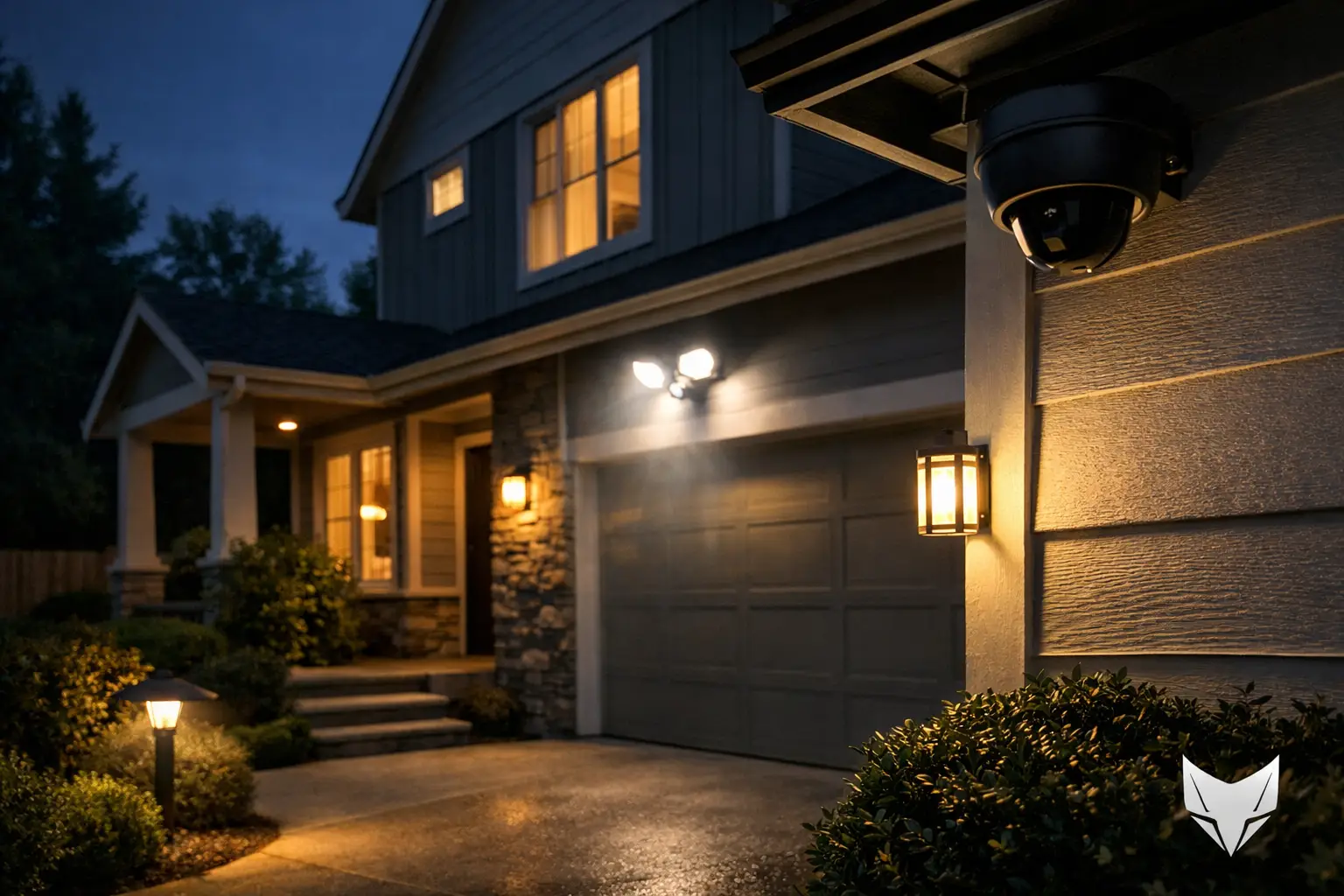
A dark side yard, a poorly lit driveway, and a back patio that disappears after sunset all create the same problem – uncertainty. Good security lighting around home is not just about making a property brighter. It is about helping you see clearly, move confidently, and make the area around your home feel active and cared for without turning it into a floodlit parking lot.
That balance matters. Too little light leaves blind spots. Too much light creates glare, annoys neighbors, and can actually make it harder to see what is happening. The best approach is thoughtful, layered lighting that supports safety and comfort while working naturally with the way you live.
What security lighting around home should actually do
When homeowners think about exterior security lighting, they often picture a single bright motion flood over the garage. That can help, but it is only one piece of the system. Effective security lighting around home should guide movement, reduce hiding spots, improve camera visibility, and make arrivals and departures feel easier.
It should also fit into daily life. You want lighting that comes on when needed, stays subtle when it should, and does not require constant adjustment. If your lighting only works well during rare emergencies, it is not really doing its job. The better standard is simple: it should make your home feel easier to use every night.
Start with the areas that matter most
The right plan begins with where people actually move around your property. Front walks, driveways, entry doors, garage approaches, side yards, gates, rear patios, and steps all deserve attention. These are the places where visibility matters for both safety and peace of mind.
A front entry usually benefits from steady, welcoming light. This is where decorative fixtures and security goals often overlap. You want enough brightness to identify a visitor, unlock a door comfortably, and support camera footage without making the entry harsh.
Driveways and garage areas often need broader coverage. That does not always mean one very powerful fixture. In many cases, two or three well-placed fixtures create more useful visibility with fewer shadows.
Side yards are frequently overlooked. They are also where darkness tends to feel most uncomfortable. Narrow passageways, utility areas, and fence lines benefit from controlled lighting that eliminates deep shadows without spilling everywhere.
Backyards depend more on how the space is used. A patio for evening seating needs a different lighting strategy than a detached garage, pool area, or simple lawn perimeter. Security and usability usually work best together here. If the space is comfortable to use, it is also easier to monitor.
Bright is not always better
One of the most common mistakes in security lighting is over-lighting. Extremely bright fixtures can wash out detail, create hard contrast, and make neighboring areas look even darker. They can also cause discomfort when you are pulling into the driveway or stepping outside at night.
Good exterior lighting is about controlled visibility. You want to illuminate faces, pathways, doors, and transitions between spaces. You do not need every corner of the yard to feel like midday.
Color temperature also affects the result. Very cool light can feel stark and commercial. Warmer light is often more comfortable around entries and living areas, while a neutral white may be useful where visibility is the main priority. It depends on the architecture of the home, nearby surfaces, and whether cameras are part of the broader system.
Motion lighting, scheduled lighting, and always-on layers
A dependable setup usually uses more than one lighting behavior. Motion-activated fixtures are useful because they respond to activity and can draw immediate attention to movement. They work well near garage doors, side yards, back gates, and secondary entries.
But motion lighting should not carry the entire load. If a property is completely dark until someone moves through it, you still have a usability problem. Scheduled lighting gives the home a lived-in appearance and keeps key pathways visible during the hours you are most likely to be arriving, leaving, or letting the dog out.
Some homes also benefit from a low-level overnight layer. This might include pathway lights, soffit-mounted fixtures, or selected architectural lighting that stays on at a modest level. That constant baseline can make the property feel more secure while helping cameras and occupants maintain orientation.
The most practical systems combine these layers. A front entry may remain softly lit from dusk to bedtime, while a side yard fixture only activates with motion. A patio may dim later in the evening but still provide enough light to move safely. This is where smart control becomes especially useful.
Smart control makes exterior lighting easier to live with
Security lighting is most effective when it is automatic, predictable, and easy to manage. That is why many homeowners move beyond standard switches and standalone motion floods. With smart lighting control, exterior lights can follow schedules, respond to motion, and be adjusted without walking through the house flipping switches.
That convenience matters more than it may seem. If a lighting system is frustrating, people stop using it correctly. Lights get left on all day, disabled after one false trigger, or ignored because no one remembers which switch controls what.
A professionally designed smart setup keeps operation simple. You might use sunset-based scheduling, vacation settings, remote control from your phone, or scene-based behavior that coordinates multiple fixtures at once. If you are away for the weekend or checking on a second property, that visibility and control can offer real peace of mind.
For homeowners in Northeast Ohio, automation also helps during long winter evenings when darkness comes early and weather conditions change quickly. A system that adjusts reliably without constant manual effort tends to get used the way it was intended.
Placement matters as much as fixture choice
Even high-quality fixtures perform poorly if they are aimed badly or mounted in the wrong location. Placement should reduce shadows, support natural movement, and avoid direct glare into windows, doorways, or camera lenses.
For example, a fixture mounted too high over a garage can throw light outward but leave the area near the vehicle in shadow. A motion light aimed across a yard may trigger constantly from passing traffic or blowing trees. A bright fixture near a front door camera may create hot spots that hurt image quality rather than improve it.
This is one reason custom planning matters. Every home has different architecture, setbacks, landscaping, and usage patterns. A lighting plan that works beautifully on one property may feel awkward on another. The goal is not just coverage. It is useful coverage.
Security lighting should work with the rest of your home technology
Exterior lighting gets better when it is considered part of the larger home system instead of a standalone add-on. Cameras, video doorbells, smart notifications, and lighting control all benefit from working together.
If motion is detected in a side yard, selected lights can respond. If you arrive home after dark, an exterior scene can light the driveway, front walk, and entry automatically. If you are traveling, your lighting can follow a realistic schedule instead of the same on-off pattern every night.
This kind of integration does not need to feel complicated. In fact, the best systems feel quiet and simple. They support security in the background without asking you to manage five different apps or remember a long list of settings. That service-minded approach is where an experienced integrator like Tri-County Technology can make a real difference.
When to upgrade your exterior lighting
If your current setup leaves parts of the property dark, triggers unreliably, or depends on a mix of aging fixtures added over time, it may be time for a more intentional plan. The same is true if your home has been renovated, landscaping has changed, or you have added cameras and noticed poor nighttime visibility.
An upgrade does not always mean replacing everything. Sometimes the biggest improvement comes from better placement, smarter controls, and a few fixture changes in the right locations. Other homes benefit from a more complete redesign, especially when security, convenience, and curb appeal all matter.
What matters most is that the system fits the property and the household. A busy family with kids, pets, and evening activity will use exterior lighting differently than a homeowner who travels often or a couple focused on quiet, low-maintenance living. The right answer is rarely one-size-fits-all.
Security lighting should help your home feel calm, visible, and easy to trust after dark. When it is planned well, you do not think about it very often. You just notice that coming home feels better, moving around outside feels safer, and the property carries itself a little more confidently every night.


Comments are closed