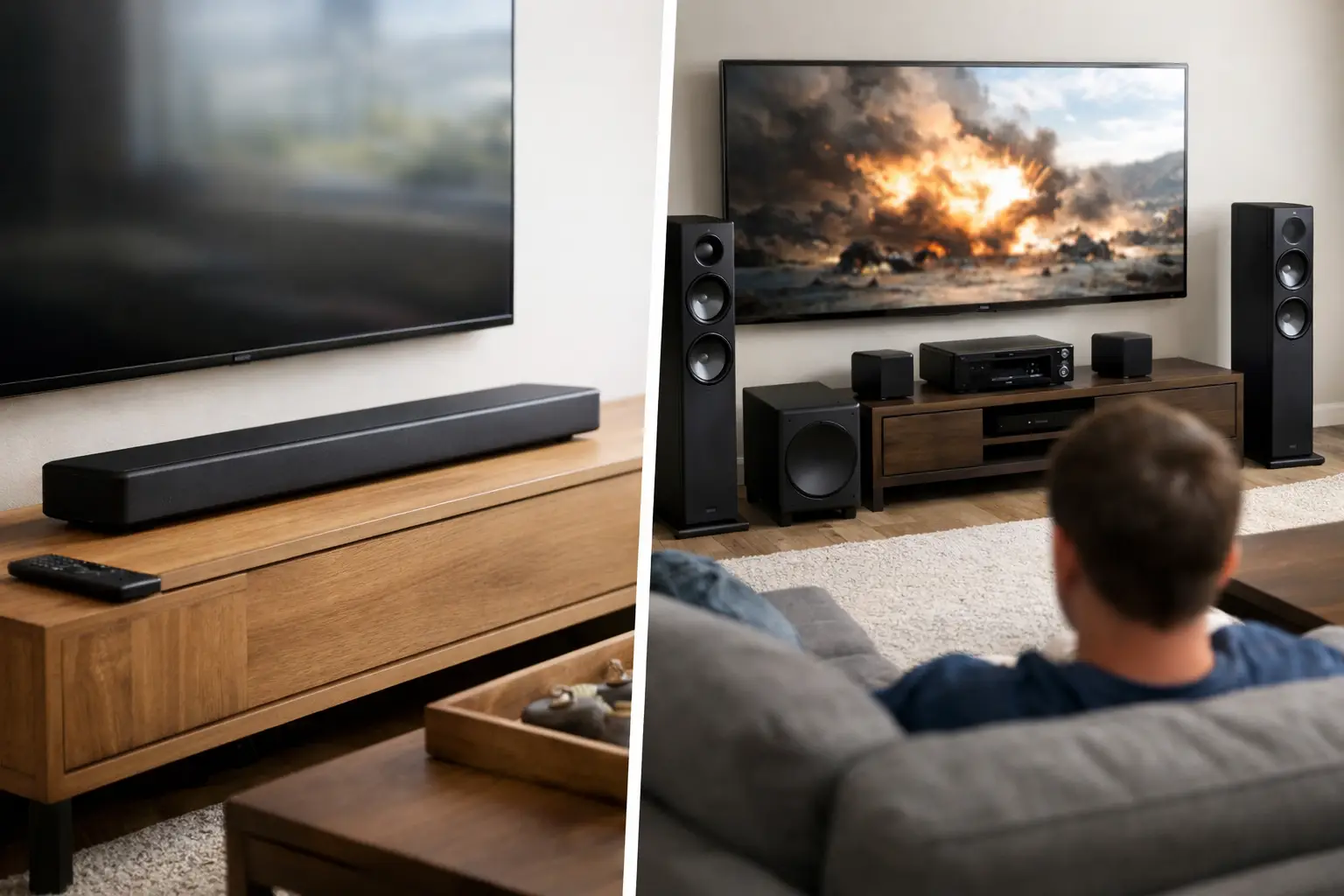
Movie night usually makes the decision for you. If dialogue sounds thin, action scenes feel flat, or the volume keeps creeping up just so everyone can hear, the built-in TV speakers are no longer enough. That is where the soundbar vs surround sound question becomes practical, not theoretical. Most homeowners are not asking which format is best on paper. They want to know which one will sound better in their room, work reliably every day, and fit their home without adding clutter or frustration.
For some spaces, a soundbar is exactly the right answer. For others, surround sound creates a level of immersion a single bar simply cannot match. The better choice depends less on brand names and more on how you use the room, how clean you want the installation to look, and how much performance you expect from the system.
Soundbar vs Surround Sound: The Core Difference
A soundbar is designed to simplify home audio. It places multiple speaker drivers into one compact enclosure, usually centered below the TV. Some models add a wireless subwoofer or rear speakers, but the goal stays the same – improve sound quality without turning the room into a full audio project.
A surround sound system separates those roles. Instead of one front speaker bar handling most of the work, you have dedicated speakers placed around the room, often with a center channel for dialogue, left and right speakers for width, surrounds for rear effects, and a subwoofer for low-end impact. That physical separation is what creates a more convincing sense of space.
In simple terms, a soundbar is about convenience and a cleaner footprint. Surround sound is about performance and immersion.
When a Soundbar Makes More Sense
A good soundbar can be a major upgrade, especially in living rooms where simplicity matters. If your goal is clearer voices, fuller sound, and easier TV watching without visible speakers throughout the room, a soundbar solves a real problem with very little disruption.
This is often the best fit in family rooms, bedrooms, condos, and open-concept spaces where people want better audio but do not want the room to feel dominated by equipment. It also works well for homeowners who stream most of their content and want one remote, one clean setup, and fewer points of failure.
There is also a practical design advantage. A soundbar keeps the front wall tidy. With professional installation, wiring can stay hidden, the TV and bar can align cleanly, and the system feels intentional instead of pieced together. That matters in homes where the technology should support the space, not compete with it.
The trade-off is straightforward. Even excellent soundbars rely on digital processing and speaker design tricks to simulate width and surround effects. Some do this surprisingly well, especially in smaller rooms with the right wall reflections. But simulated surround is not the same as sound coming from actual speakers beside and behind you.
When Surround Sound Is Worth It
If you care deeply about cinematic sound, surround sound earns its place. The difference is most noticeable in dedicated media rooms, basements, bonus rooms, and any space where seating is arranged around a clear viewing area. In those rooms, separate speakers create more accurate placement of effects, stronger dynamics, and more believable immersion.
Dialogue can sound more focused because a dedicated center channel handles speech. Music can feel wider and more natural. Action scenes gain impact because sounds move around the room instead of being projected mainly from the front of it. Even at moderate volume, a well-designed surround system tends to sound more effortless.
That said, surround sound asks more from the room and the installation. Speaker placement matters. Wiring matters. Furniture layout matters. If the room is very open, highly reflective, or arranged in a way that pushes seating against a back wall, the result may not live up to expectations unless the design is tailored to the space.
This is why the best surround systems are planned, not just purchased. The room should guide the system, not the other way around.
The Room Matters More Than Most People Expect
Many buyers compare products when they should first be evaluating the room. A soundbar in a modest-sized room with a centered TV and controlled acoustics can outperform a poorly placed surround setup. On the other hand, a larger room with distance between the screen and seating often exposes the limits of a soundbar quickly.
Ceiling height, flooring, windows, wall materials, and furniture all affect what you hear. A room full of hard surfaces may create harsh reflections. A very open floor plan can let bass disappear and weaken surround effects. A room with no practical place for rear speakers may point you toward a soundbar, or toward an architectural speaker solution if you want performance without visible boxes.
For homeowners planning a renovation or new build, this is the right time to think ahead. Prewiring, speaker locations, TV placement, and control decisions are much easier to handle before drywall is closed up or finishes are complete. In retrofit spaces, good planning still matters because a clean result depends on working with the room instead of forcing a one-size-fits-all package into it.
Ease of Use Is Not a Small Detail
Audio performance gets attention, but everyday usability is what people live with. A soundbar usually wins here. It is typically simpler to operate, simpler to explain to guests, and less likely to create confusion between remotes, inputs, and sound modes.
That does not mean surround sound has to be complicated. A professionally integrated system can be just as intuitive from the user’s perspective. The difference is that surround sound has more moving parts behind the scenes, so design and setup quality matter more. If components are mismatched or poorly programmed, the experience can feel needlessly fussy.
For homeowners who want technology to stay in the background, this is often the deciding factor. Better sound should not come with a daily learning curve. The right system is the one that turns on easily, stays consistent, and performs the same way every time someone presses play.
Budget, Value, and Long-Term Expectations
The soundbar vs surround sound decision also comes down to what kind of investment makes sense for the room. A soundbar is usually the more affordable path, both in equipment and installation. It can deliver a strong jump in quality without requiring a full room design or multiple speaker runs.
Surround sound costs more because there is more involved. More speakers, more labor, more planning, and often more customization. But in the right room, the value is real. You are not just buying louder audio. You are creating an entertainment experience that feels complete and anchored to the space.
It is also worth thinking beyond the initial purchase. Some homeowners start with a soundbar and later want more depth, only to discover that their room was never prepared for expansion. Others spend heavily on surround components but use the room so casually that they never take advantage of what the system can do. The better value comes from choosing the system that matches the way you actually live.
Which Option Fits Different Types of Homes?
In many primary living spaces, a soundbar is the practical winner. It keeps things simple, looks clean, and delivers a noticeable improvement for TV, sports, and streaming without turning the room into a theater.
In a dedicated media room, surround sound is usually the better answer. That room exists for focused viewing, and the system should take full advantage of that purpose.
In open-concept homes, the answer depends on layout. If there is no good way to place rear speakers or define the seating zone, a soundbar may offer the best balance of performance and appearance. If the room is large and designed around a main viewing area, a thoughtfully installed surround system can still work beautifully.
For new construction and major remodels, it often makes sense to plan for surround sound even if you start simpler. Hidden wiring and thoughtful infrastructure give you more flexibility later without disturbing finished spaces.
The Best Choice Is the One You Will Enjoy Every Day
There is no universal winner between soundbar and surround sound. There is only the right fit for your room, your expectations, and your tolerance for complexity. If you want a clean upgrade that improves daily viewing with minimal fuss, a soundbar is often the smart move. If you want the room to disappear and the movie to take over, surround sound is hard to beat.
The key is not chasing features for their own sake. It is choosing a system that sounds right, looks right, and feels easy to live with long after installation day. When the design fits the home, better audio stops being a gadget upgrade and starts feeling like part of the room itself.


Comments are closed