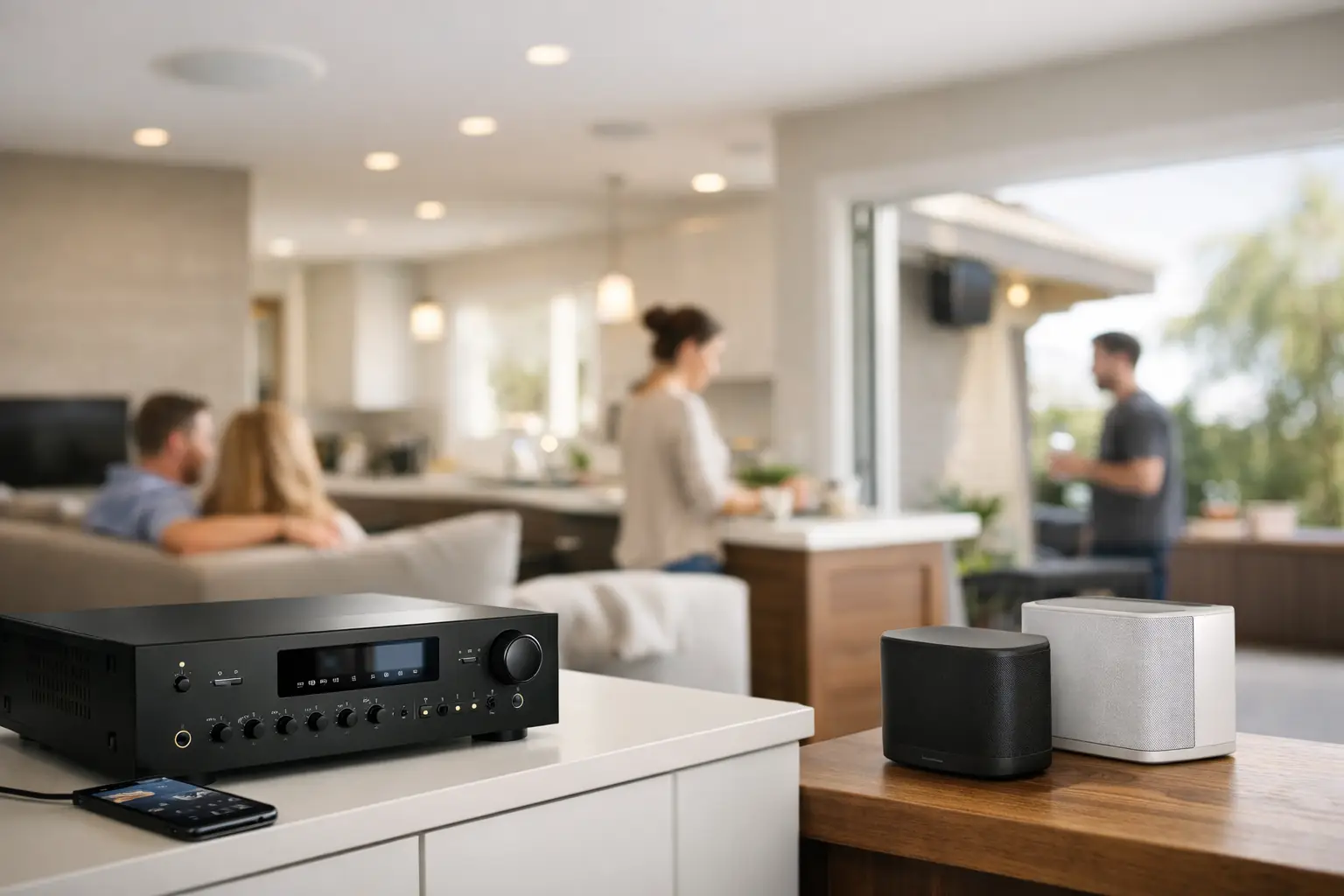
Music feels different when it follows the way you actually live. In a kitchen, it should be easy to hear while coffee is brewing. On a patio, it should add energy without overpowering conversation. In a bedroom, it should stay calm and low. That is the real appeal of whole home multi zone audio – not just more speakers, but better control over where sound goes, how it sounds, and how easily it fits into everyday life.
For many homeowners, the goal is not a house filled with technology for its own sake. The goal is simple entertainment that works without clutter, connection issues, or a pile of remotes and apps. A well-designed audio system should feel like part of the home, not another thing to manage.
What whole home multi zone audio actually means
Whole home multi zone audio is a system that lets you play audio in multiple rooms or areas, with each area working as its own zone. A zone could be a kitchen, living room, primary bath, patio, office, or basement. You can play the same music everywhere, send different sources to different spaces, or turn some areas off while others stay active.
That flexibility is what separates a true multi-zone system from a few standalone speakers placed around the house. With the right design, the system is organized, centralized, and easy to control. You are not pairing devices room by room or trying to remember which speaker belongs to which app. Instead, the experience is consistent throughout the property.
This matters even more in larger homes, open-concept layouts, and homes with outdoor living areas. Sound needs change from space to space. What works in a media room usually is not the same as what works in a breakfast nook or covered porch.
Why homeowners choose whole home multi zone audio
The biggest reason is convenience. You can start music in one room, add another area when guests arrive, and lower the volume upstairs without walking through the house. Good control makes the system feel effortless.
The second reason is appearance. Most people do not want speaker wires running along baseboards or bulky gear stacked in every room. Professionally installed systems can place speakers cleanly in ceilings, walls, or outdoor locations while keeping equipment tucked away.
There is also a quality difference. A designed system tends to sound fuller, more even, and more reliable than a mix of portable speakers. That does not always mean louder. In fact, many homeowners want balanced background audio that fills a room comfortably without hot spots or harsh volume.
For families, there is another benefit. Different people use spaces differently throughout the day. Someone can listen to a podcast in a home office while another person streams music in the gym and the kids use another zone for something else. The system supports the household instead of forcing everyone into one setup.
The most common ways these systems are built
There is no single right approach. The best setup depends on the home, the rooms involved, and how you want to use it.
Some systems are centered around in-ceiling or in-wall speakers connected to centralized amplifiers. This is often the cleanest long-term option, especially in new construction or major remodeling. It keeps the look polished and gives you strong, stable performance across many rooms.
Other systems combine architectural speakers in main living areas with outdoor speakers on patios and landscape zones. Outdoor audio usually needs more planning than people expect. Weather resistance matters, but so does speaker placement. The goal is to cover the area evenly, not blast the yard from one corner.
There are also retrofit-friendly options for existing homes where opening walls is limited. In those cases, the design may need to balance ideal placement with practical installation constraints. A good integrator will be honest about those trade-offs and build around them.
What to think about before you install
The first question is where audio will really be used. Not every room needs speakers. It is better to choose the spaces that fit your habits than to overbuild. Kitchens, family rooms, primary suites, bathrooms, patios, and home offices are common priorities because people spend meaningful time there.
The second question is how independent each area should be. If you usually entertain on the first floor, it may make sense to group some spaces together. If everyone in the house has different listening preferences, more separate zones may be worth it.
Source selection also matters. Some households mainly stream music. Others want TV audio in selected rooms, or they want to switch between music services, podcasts, and local sources. The system should support the way you already listen, rather than asking you to adapt to a rigid setup.
Then there is control. This is where many systems either feel simple or become frustrating. App control is common, but wall keypads can still be very useful in high-traffic areas. If you want music at the touch of a button in the kitchen or on the patio, physical controls are often a smart addition.
Why design matters more than most people expect
Audio is one of those categories where the equipment gets attention, but the design does the real work. Speaker placement, room size, ceiling height, surface materials, and background noise all affect performance.
A vaulted great room may need a different approach than a smaller den. A tile bathroom reflects sound differently than a carpeted bedroom. Outdoor areas introduce even more variables, including wind, traffic noise, and seating patterns. If the design ignores those details, even good products can feel disappointing.
This is also why a professionally installed system often feels easier to use over time. The technology is coordinated from the beginning. Wiring, amplification, control, and speaker placement are chosen to work together. You are less likely to run into the patchwork problems that happen when products are added one at a time without a plan.
New construction versus retrofit
New construction gives you the most freedom. Wiring can be planned before drywall, speaker locations can align with the home’s architecture, and equipment spaces can be chosen early. If whole home multi zone audio is even a possible future goal, it is worth discussing during the build stage.
Retrofit projects are still very achievable, but they require more strategy. In an existing home, the installer has to work with finished surfaces, structural limitations, and the way the house is already being used. Sometimes that means choosing discreet speaker locations over perfect symmetry. Sometimes it means starting with a few priority zones now and expanding later.
That phased approach works well for many homeowners. You do not have to do the entire property at once to get value from the system.
How whole home multi zone audio fits into daily life
The best systems are felt more than noticed. Morning playlists start in the kitchen and breakfast area. Music follows dinner prep and carries into the patio when friends come over. A calming station plays in the primary bath at the end of the day. During holidays, the whole house can share the same soundtrack without moving speakers from room to room.
In small business settings, the same idea applies. Reception areas, waiting rooms, conference spaces, and staff zones often benefit from controlled, dependable background audio. The key is keeping operation simple so no one has to troubleshoot it in the middle of the day.
For homeowners in Northeast Ohio, where indoor and outdoor living patterns shift with the seasons, flexible zoning is especially useful. You may rely heavily on interior zones in winter and expand to patio or backyard areas when the weather turns.
Common mistakes to avoid
One of the most common mistakes is focusing only on product names instead of the listening experience. The brand matters less than whether the system is designed around your rooms and habits.
Another mistake is underestimating control. A system that sounds great but feels confusing will not get used the way it should. Ease of use is part of performance.
It is also easy to overbuild. More zones are not always better. More speakers are not always better either. A clean, right-sized system usually delivers a better experience than one that tries to cover every possible space without a clear reason.
Finally, do not ignore support. If your network, streaming setup, and control platform all affect the audio experience, they need to work together. That is why many homeowners prefer working with an integrator who can design, install, and support the full system rather than leaving them to piece it together alone.
A well-planned audio system should make your home feel more comfortable, more welcoming, and easier to enjoy. If it is designed around the way you live, whole home multi zone audio becomes less about equipment and more about having the right sound in the right place, right when you want it.


Comments are closed