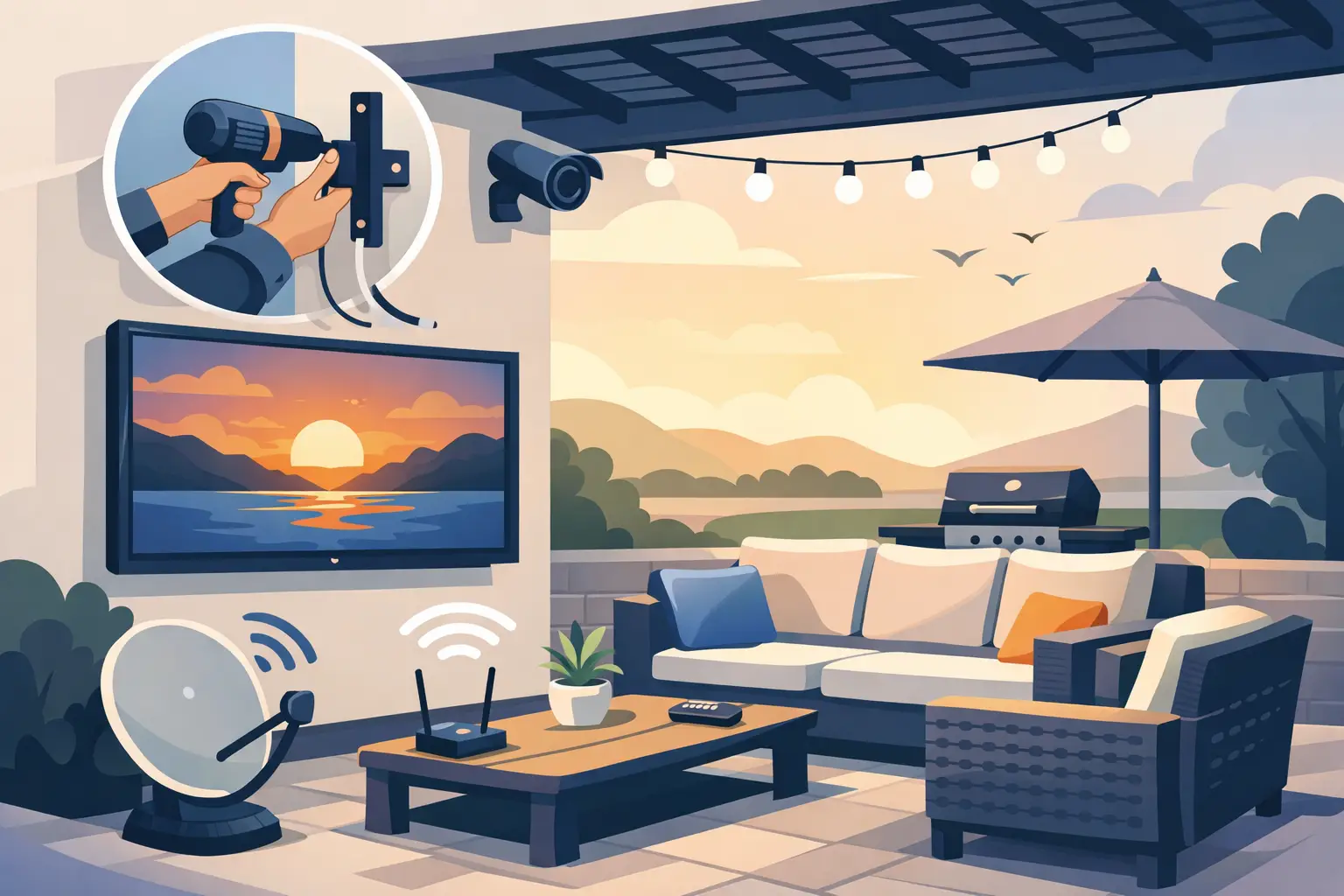
A great outdoor TV setup should feel like part of the patio, not a temporary screen with cords running across the wall. Knowing how to install outdoor TV equipment correctly starts with planning for weather, sunlight, power, connectivity, and comfortable viewing before the mount ever goes up.
For homeowners in Northeast Ohio, that planning matters even more. Heat, rain, snow, wind, humidity, and sharp temperature swings can all affect equipment and installation details. A clean, professionally designed setup makes it easy to enjoy the game, a movie, or family time outside without worrying about the technology in the background.
Start With an Outdoor-Rated TV
The first decision is also the most important: choose a television made for outdoor use. An indoor TV may work on a covered porch for a short time, but it is not built to manage moisture, changing temperatures, insects, or the brightness of an open-air setting. Even under a roof, humidity and wind-driven rain can reach places homeowners do not expect.
Outdoor-rated TVs use weather-resistant materials, protected connections, and display panels designed for brighter environments. They also manage heat and cold more effectively than standard indoor models. That difference is what protects your investment and keeps the picture dependable through changing seasons.
There are generally two viewing environments to consider. A full-shade model is designed for a screened porch, covered patio, or other area with little direct sun. A partial-sun model is better when the screen will receive ambient daylight or periods of indirect sunlight. If the TV will face direct afternoon sun, the location may need to change. Even a bright outdoor display can be difficult to watch when glare is working against it.
Choose the Location Before You Choose the Mount
The best location balances visibility with protection. Begin by standing in the seating area at the time of day you expect to use the space most. Look for reflections from windows, bright skies behind the TV, and the path of afternoon sun. A screen placed opposite the strongest light source is usually easier to see.
Mounting height matters, too. Outdoor TVs are often installed too high because the wall is tall or because the TV is placed above a fireplace or outdoor kitchen feature. While there are exceptions, the center of the screen should generally sit close to the seated viewer’s eye level. This reduces neck strain and provides a more natural view for guests.
Consider how people move through the space. The TV should not block a walkway, compete with a door swing, or sit where a grill’s heat and smoke will reach it. Leave room for service access behind or around the display. A beautiful installation is still easier to live with when future adjustments do not require taking apart part of the patio.
Confirm the Wall Can Carry the Load
A TV mount must be fastened into solid framing, masonry, or another approved structural surface. Exterior trim, siding, decorative stone, and thin cladding alone are not enough to support a television. The mount needs the correct fasteners for the wall material, and the TV’s weight must remain within the mount’s rated capacity.
On a new build, this is an ideal time to add blocking behind the planned TV location. During a retrofit, locating studs or understanding the masonry structure is essential. This is one area where guessing can create damage, loose hardware, or an uneven installation.
Plan Power and Wiring for an Outdoor TV Installation
A polished outdoor TV installation has no visible extension cord and no loose cabling exposed to weather. Plan for a properly installed, weather-rated power source near the TV location. Local electrical requirements apply, and electrical work should be completed by a qualified professional when a new circuit or outlet is needed.
Power is only one part of the plan. Most outdoor TVs also need a stable internet connection for streaming, app-based viewing, and software updates. Wi-Fi may reach the patio, but a signal that seems fine while standing outside can struggle once multiple people are streaming or doors are closed. A wired network connection is often the most dependable choice when the wall is being opened or conduit is being installed.
Conduit provides a clean path for low-voltage wiring and makes future upgrades much easier. It can carry network cable, HDMI, audio connections, and control wiring while keeping those components protected and out of sight. The right conduit size matters. A path that barely fits one cable today can become a frustrating limitation when you add a streaming device, upgraded display, or outdoor audio later.
If an HDMI source will live indoors, account for cable distance and signal quality. Long HDMI runs may require the right extender or a different distribution approach. The goal is simple control from the patio, not a collection of remotes and source devices that only work when someone goes inside to reset them.
Install the Mount and TV With Weather in Mind
Once the location, structure, and wiring are ready, install the outdoor-rated mount according to its specifications. Use a level, confirm stud or masonry placement, and tighten all hardware appropriately. The mount should sit flat against the wall with no movement or flex.
Before hanging the TV, connect the needed cables and organize them so they are not pinched by the mount’s moving parts. If you are using a tilting or articulating mount, leave enough cable slack for its full range of motion without creating a visible loop. Drip loops at cable entry points help prevent water from following a cable directly into an enclosure or wall opening.
Any exterior penetration should be properly sealed, but sealing does not mean trapping water. The installation needs thoughtful weather protection around cable paths, wall plates, and enclosures. Use components rated for exterior use rather than adapting indoor plates and boxes that are not intended for moisture or temperature changes.
After the TV is mounted, check that it is level from normal seating areas. A display can look straight while standing close to it but appear noticeably off from across the patio. Test the mount’s tilt and swivel range, then secure any adjustment points once the screen is positioned correctly.
Build a Setup That Is Easy to Use
The best outdoor entertainment systems reduce small frustrations. That may mean using one familiar remote, placing streaming hardware in a protected location, or connecting the TV to a whole-home audio system so sound reaches the seating area clearly. A TV’s built-in speakers may be enough for a small covered porch, but they can struggle against conversation, wind, water features, and outdoor ambient noise.
Outdoor speakers can improve clarity without requiring excessive volume. The placement should support the seating area rather than blast sound toward neighbors. For larger patios, zoning allows the TV area to play audio independently from other outdoor spaces.
Do not overlook control and network testing. Connect the TV to the home network, sign in to preferred streaming services, run updates, and confirm that the remote works from the places people actually sit. Test the setup after dark as well as during daylight. What looks good at noon may need a brightness adjustment in the evening.
When Professional Installation Is the Better Choice
Some projects are straightforward, especially if a covered patio already has the correct power, strong Wi-Fi, accessible framing, and a planned cable path. Others involve masonry, long cable runs, new construction coordination, audio integration, or a difficult viewing environment. Those are the moments when professional design can prevent expensive rework.
Tri-County Technology helps homeowners plan outdoor entertainment around the way they use their space, from clean mounting and concealed wiring to dependable connectivity and intuitive control. The right installation is not about adding more equipment. It is about making the patio feel more comfortable, more usable, and ready when friends and family gather.
A well-installed outdoor TV should disappear into the experience: a clear picture, simple control, and a patio that is ready for whatever you want to watch outside.


Comments are closed