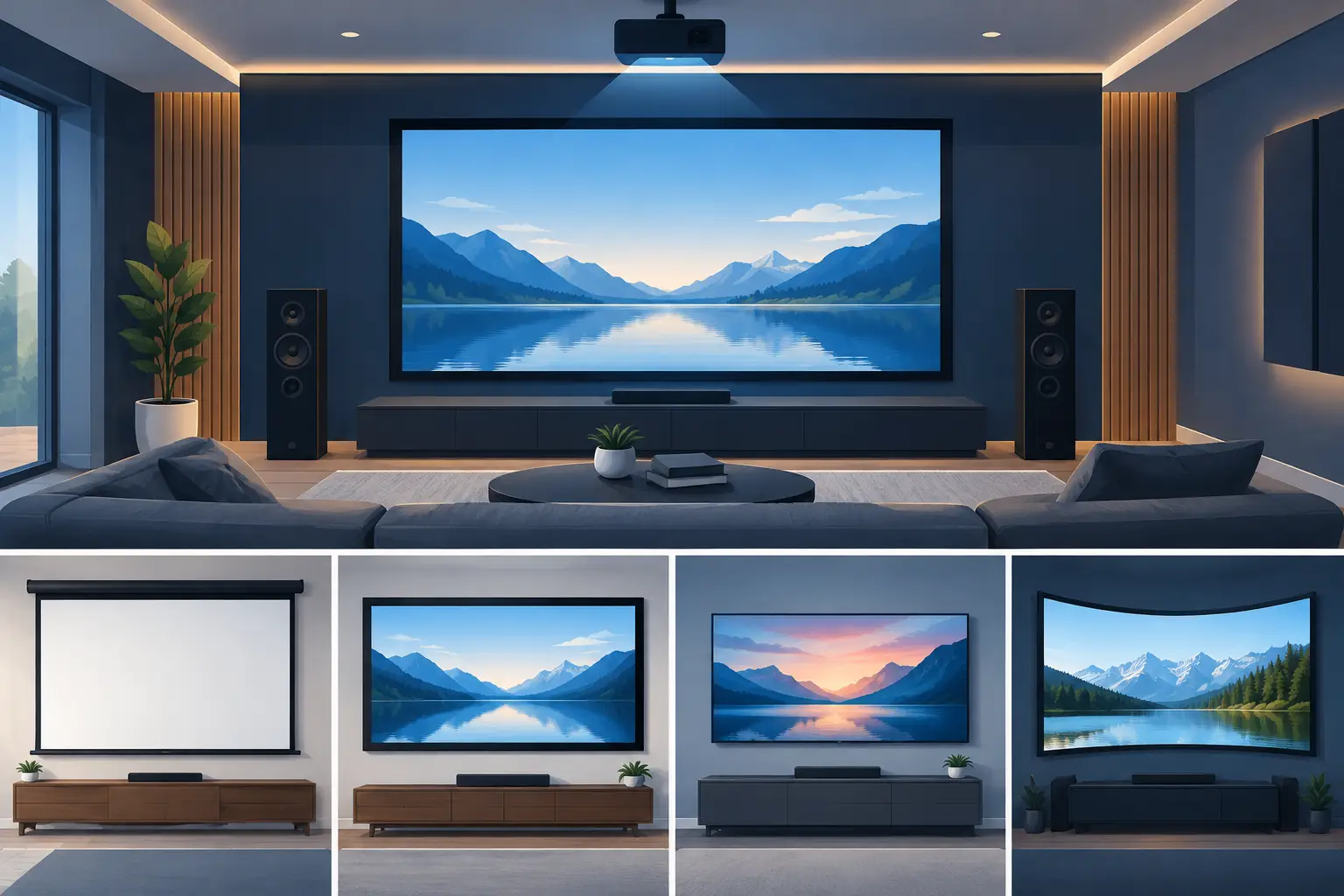
A projector can deliver a remarkably large image, but the screen is what makes that image feel finished. The best home theater screen types are not simply the brightest or most expensive options. The right choice depends on how your room handles light, where people sit, the projector you use, and whether the theater needs to disappear when movie night is over.
For a dedicated theater with controlled lighting, screen selection can prioritize cinematic color and a wide viewing angle. For a family room with windows, recessed lights, and daily activity, the screen may need to preserve contrast in conditions that are less predictable. A well-designed system considers the room first, then matches the screen and projector to it.
The Best Home Theater Screen Types, Explained
Projection screens fall into a few practical categories. Each has a place, and each asks for a different level of planning during a new build or renovation.
Fixed-frame screens
A fixed-frame screen is mounted permanently on the wall and stretched tightly inside a rigid frame. This is often the best choice for a dedicated home theater because the viewing surface stays perfectly flat, with no curling, waves, or setup required before a movie starts.
The black border around a fixed-frame screen also helps define the image, making perceived contrast feel stronger. It is a clean, polished solution when the room has a wall reserved for the theater. If a large TV, artwork, or windows need to occupy that same wall at other times, however, a fixed screen may not fit the room as naturally.
For homeowners who want the most consistent picture and do not need the screen to retract, fixed-frame is usually the reference point against which other screen types are measured.
Motorized retractable screens
A motorized screen lowers from a ceiling-mounted case when it is time to watch and retracts out of sight afterward. It is an excellent option for multipurpose rooms where the theater shares space with everyday living, entertaining, or a fireplace wall.
The benefit is not only visual. A professionally integrated motorized screen can be tied into a single, intuitive theater control routine: lower the screen, power on the projector, select a source, and adjust the room for viewing. The technology stays in the background instead of adding another task at the start of the evening.
Installation details matter here. The screen case needs proper support, clean power, and enough clearance for the screen to drop without hitting trim, furniture, or a ceiling fan. In a new build, recessing the housing into the ceiling creates a particularly refined look. In a finished home, surface mounting can still look clean when planned carefully.
Tab-tensioned motorized screens
Not every retractable screen is made the same way. Standard roll-down screens can develop slight edge curl or ripples over time, especially at larger sizes. A tab-tensioned model uses a cable system along the sides to keep the material flat as it extends.
That flatter surface is valuable with modern high-resolution projectors, where fine detail makes imperfections easier to notice. Tab tensioning costs more than a basic motorized screen, but it is often the better long-term choice for a primary viewing space. It combines the convenience of a retractable screen with a picture that remains more consistent across the entire image.
Floor-rising screens
A floor-rising screen extends upward from a slim cabinet or enclosure at the floor. It can work well when ceiling installation is impractical or when a room needs a projection screen in front of large windows without adding a visible ceiling case.
This type of screen requires floor space and careful furniture planning. The housing must remain accessible, and nothing can block its path when it rises. It is more specialized than a ceiling-retracting model, but in the right setting it provides a flexible, elegant answer to a difficult layout.
Ambient light-rejecting screens
Ambient light-rejecting, often called ALR, screens are designed to direct projected light toward viewers while reducing the effect of light coming from other angles. They can make a meaningful difference in a bright family room, especially when daylight or overhead lighting cannot be fully controlled.
There is a trade-off. ALR materials are more directional than traditional white screens, which can narrow the ideal viewing area. Some materials can also introduce a slight sparkle or texture that is more noticeable at close seating distances. The projector must be matched carefully to the screen material and mounting position for the best result.
An ALR screen is not a substitute for thoughtful room design. Window treatments, light placement, and projector brightness still matter. But when a dedicated dark theater is not realistic, it can help a projector system perform more confidently in a lived-in space.
Acoustically transparent screens
An acoustically transparent screen allows speakers to sit behind the image, much like a commercial cinema. This creates an especially convincing front soundstage because voices and on-screen action come from the same location.
There are woven and perforated versions. Woven materials generally provide a more natural surface at close range, while perforated materials can work well with the proper speaker placement and screen size. Either option needs careful design. The speakers, wall treatment, projector position, and viewing distance all affect the result.
This screen type is a strong fit for dedicated theaters where performance and clean architecture are both priorities. It also allows a large image to take center stage without forcing the front speakers to the sides of the screen.
Screen Material Matters as Much as Screen Style
Once you choose a screen format, the surface material shapes the final picture. Gain is one of the main specifications to consider. A gain of 1.0 reflects light evenly and is a reliable starting point for many controlled-light theaters. Higher-gain screens can make the image appear brighter, but may reduce viewing angles and show more variation across the screen.
A matte white material usually provides natural color and broad seating flexibility. It remains a practical choice for dark or light-controlled rooms. Gray materials can improve perceived black levels in spaces with some ambient light, although they need enough projector brightness to avoid a dim picture.
Color accuracy, texture, and compatibility with 4K projection also deserve attention. A sample viewed under real room conditions can reveal more than a product specification alone. The right material should support the image without calling attention to itself.
Choose Screen Size From Seating Distance, Not Wall Size
A blank wall can tempt homeowners to choose the largest screen that fits. Comfortable viewing is more nuanced. If viewers sit too close, a very large image can feel tiring, particularly during sports, gaming, or movies with fast motion. Sit too far away, and the benefit of high-resolution content is diminished.
A practical starting point is to plan the main seating before finalizing screen size. Many home theaters feel comfortable when the screen width is roughly half to two-thirds of the distance from the primary seats. Personal preference matters, though. Some people want an immersive front-row feel; others prefer a more relaxed, wide-room perspective.
Aspect ratio also changes the experience. A 16:9 screen suits television, sports, streaming, and gaming. A wider 2.35:1 or 2.40:1 screen creates a cinematic format for many films, but shows black space on the sides with standard TV content unless the system is designed around adjustable image sizing. Neither is universally better. The right format follows what your household watches most.
Plan the Room Around the Picture
The screen, projector, sound, wiring, and room lighting should be designed as one system. A beautiful screen cannot compensate for a projector placed too far away, a poorly planned cable route, or lights that reflect directly onto the image. These details are easiest to address before walls and ceilings are finished, but thoughtful retrofit work can solve many of the same challenges.
In Northeast Ohio, seasonal daylight can be another real consideration. A room that looks controlled on a winter evening may receive strong sun during a summer afternoon. Motorized shades, well-placed lighting, and a screen material suited to the room’s actual use can keep the theater enjoyable throughout the year.
Tri-County Technology approaches projection theaters around how the space will be used, not just what looks impressive on a spec sheet. The most satisfying result is one that starts easily, looks clean, and works reliably whether it is a quiet weeknight movie or a room full of guests.
Before selecting a screen, picture a normal evening in the room: where the light comes from, where everyone sits, and what needs to disappear when the movie ends. That simple exercise usually points to the screen type that will feel right for years.


No responses yet