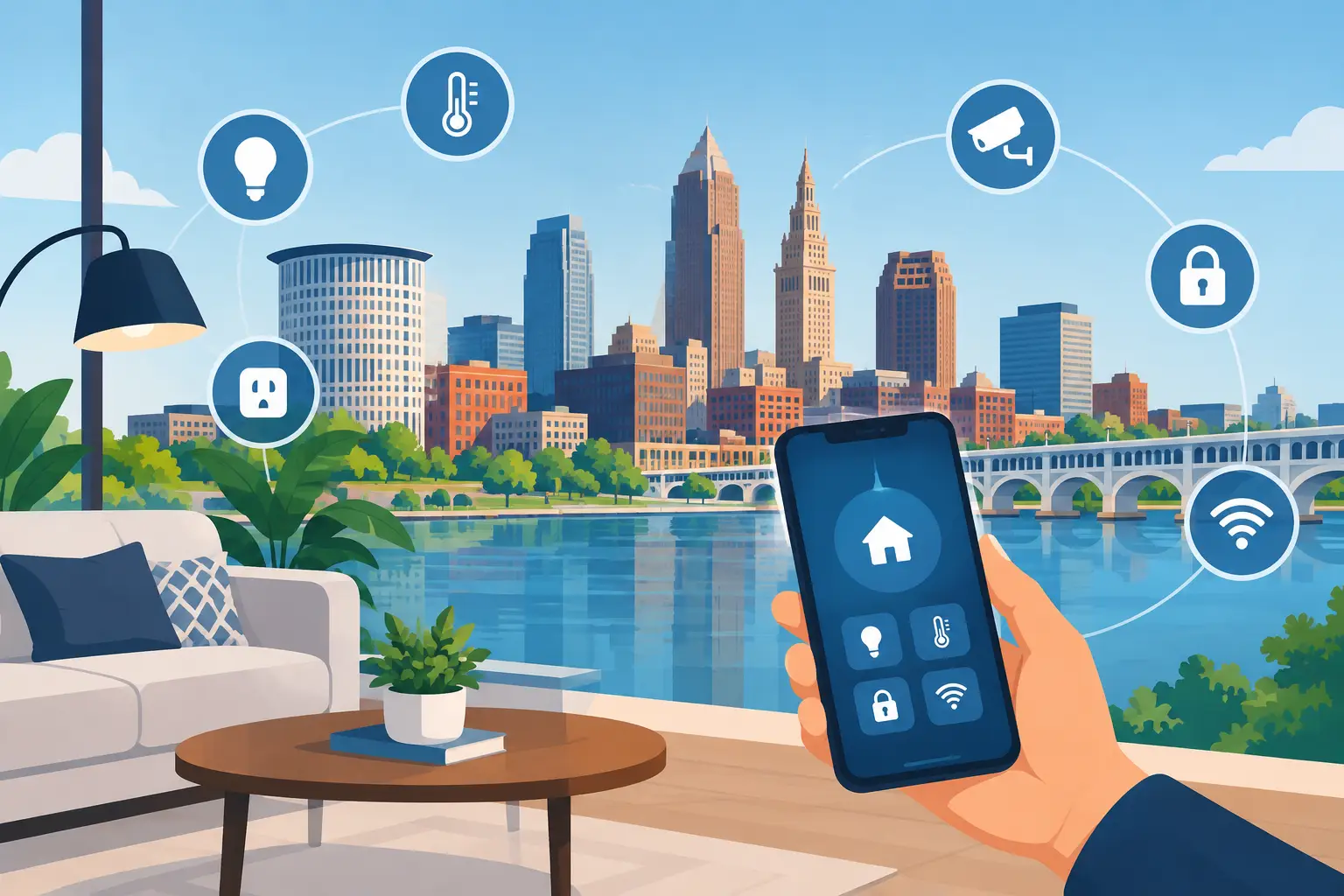
A well-designed smart home should not ask you to think about it all day. It should make the morning routine smoother, bring the right light into a room after sunset, keep music close at hand, and give every member of the household an easy way to use the home. This Cleveland automation guide focuses on the connected systems that deliver that kind of everyday comfort without turning your house into a collection of complicated apps.
For homeowners, builders, and renovation teams, the best starting point is not a device. It is a conversation about how the home is used. A family that hosts weekend gatherings needs something different from a couple creating a quiet primary suite, and a new build has different opportunities than a finished home that needs thoughtful upgrades.
What a Cleveland Automation Guide Should Solve
Automation works best when it removes small points of friction. That could mean lights that respond to a simple wall keypad, shades that adjust with the afternoon sun, or a theater that starts with one familiar command instead of a search for several remotes.
The goal is not to automate every possible action. Too much automation can feel unpredictable or restrictive, especially when it interrupts personal preferences. The better approach is to choose a few high-value routines, make manual control easy, and build from there only when the system proves useful.
In Northeast Ohio, seasonal changes make this especially practical. Short winter days, bright summer rooms, and busy family schedules all affect how a home feels. Connected lighting and motorized shades can help a space stay comfortable and welcoming from one season to the next, while strong Wi-Fi supports the devices people already rely on for work, entertainment, and communication.
Start With Daily Routines, Not Product Lists
A homeowner may ask for smart lighting, whole-home audio, or better Wi-Fi. Those are useful starting points, but a professional design conversation should go further. Which rooms are used most? Where does the current setup create frustration? Who needs to control the system, and how comfortable are they with technology?
For example, a kitchen, family room, and patio may function as one entertaining zone. In that case, coordinated lighting and audio can make more sense than treating each room as a separate project. A home office may need dependable coverage for video calls, while a media room may need equipment placed out of sight so the room remains clean and comfortable.
Good automation also respects habits. Some people prefer a wall control over a phone. Others want both. A system should offer intuitive choices rather than forcing every task through one method.
New Construction Creates a Strong Foundation
New homes offer the best opportunity to plan ahead. Structured wiring can be installed before drywall, allowing equipment, displays, speakers, and wireless access points to be placed where they perform best. This reduces visible wires later and gives the home room to adapt as needs change.
Builders benefit when low-voltage planning happens early, alongside electrical, HVAC, and finish decisions. The placement of TV locations, ceiling speakers, Wi-Fi equipment, shade wiring, and control points affects both the finished appearance and the homeowner experience. Waiting until the final stages can limit options and add avoidable expense.
That does not mean every future feature must be installed immediately. Often, the smartest choice is to prepare the wiring and infrastructure now, then add selected components when the homeowner is ready.
Retrofit Projects Need a Different Kind of Care
An existing home can still gain meaningful automation without opening every wall. Wireless controls, carefully placed equipment, and targeted wiring routes can improve daily use while protecting finished spaces. The right solution depends on construction details, room layout, and the condition of the home network.
Retrofit work involves practical trade-offs. A fully hidden installation may require more labor in some homes, while a focused upgrade can produce an excellent result with less disruption. An experienced integrator can explain those choices clearly and recommend where investment will have the greatest impact.
The Systems That Make the Biggest Difference
Lighting That Fits the Moment
Lighting control is often one of the most immediately rewarding improvements. Rather than walking through the house to turn off individual lights, homeowners can use a single button for bedtime, entertaining, or leaving the house. In frequently used rooms, personalized scenes can bring together the right brightness levels without making the controls feel complicated.
The strongest lighting plans still make sense at the wall. A guest should be able to enter a room and use the lights without instruction. Automation adds convenience, but straightforward local control remains essential.
Motorized Shades for Comfort and Privacy
Motorized window treatments can make large windows easier to enjoy. They can help manage glare in a media room, soften intense afternoon light in a kitchen, and add privacy in the evening. When paired with lighting scenes, shades can create a more comfortable atmosphere without requiring constant adjustments.
The details matter here. Fabric selection, window shape, mounting location, power planning, and control preferences all affect the final result. A shade that looks elegant but is difficult to operate has missed the point.
Whole-Home Audio Without the Clutter
Music has a way of changing how a home feels, whether it is background sound during dinner or a favorite playlist on a quiet morning. Whole-home audio lets homeowners choose where music plays and how it is controlled, without filling rooms with mismatched speakers and cords.
Audio design should match the way each space is used. Ceiling speakers may suit an open living area, while a dedicated listening room may call for a more focused approach. Sound quality, coverage, and equipment placement should be considered together so the finished system feels natural rather than noticeable.
Wi-Fi That Supports the Whole Home
A strong home network is the quiet foundation beneath connected living. Streaming, video calls, smart TVs, tablets, and home controls all depend on reliable coverage. When Wi-Fi is inconsistent, even good devices can feel frustrating.
The answer is rarely just adding another consumer extender. Proper Wi-Fi optimization considers the home’s size, wall materials, layout, device load, and the location of access points. Wired connections can also be valuable for stationary equipment that needs dependable performance, such as media systems and workspaces.
Keep Control Simple and Support Close
One of the most common mistakes in home technology is adding separate apps for every product. Over time, that approach becomes harder to manage, especially when devices change, passwords are forgotten, or one component stops communicating as expected.
A professionally planned system brings related functions together in a clear, approachable way. That may include wall controls, touchscreens, or a mobile interface, but the important part is consistency. Controls should use plain labels, familiar room names, and actions that make sense to everyone in the household.
Professional support also matters after installation. Home technology is not static. Families move furniture, change rooms, add equipment, and update routines. A system that can be adjusted and supported over time protects the value of the original investment.
Plan the Budget Around What You Will Use Most
There is no single right budget for home automation. The practical question is where the investment will improve life most often. For some homes, that starts with Wi-Fi and a living-room media setup. For others, the priority is lighting and shades in the main living spaces. A new build may benefit most from structured wiring that preserves future options.
Avoid spreading a limited budget across too many disconnected features. It is usually better to complete a few core systems properly than to install many partial solutions that are difficult to use or maintain. Start with the spaces that carry the most daily activity, then create a path for future additions.
The best home technology does not demand attention. It supports the moments already happening in the home: a calmer morning, a more comfortable evening, a movie that starts without a tangle of remotes, and reliable connection where it matters. With thoughtful design and professional installation, automation can feel less like a feature and more like a home that simply works better.


No responses yet