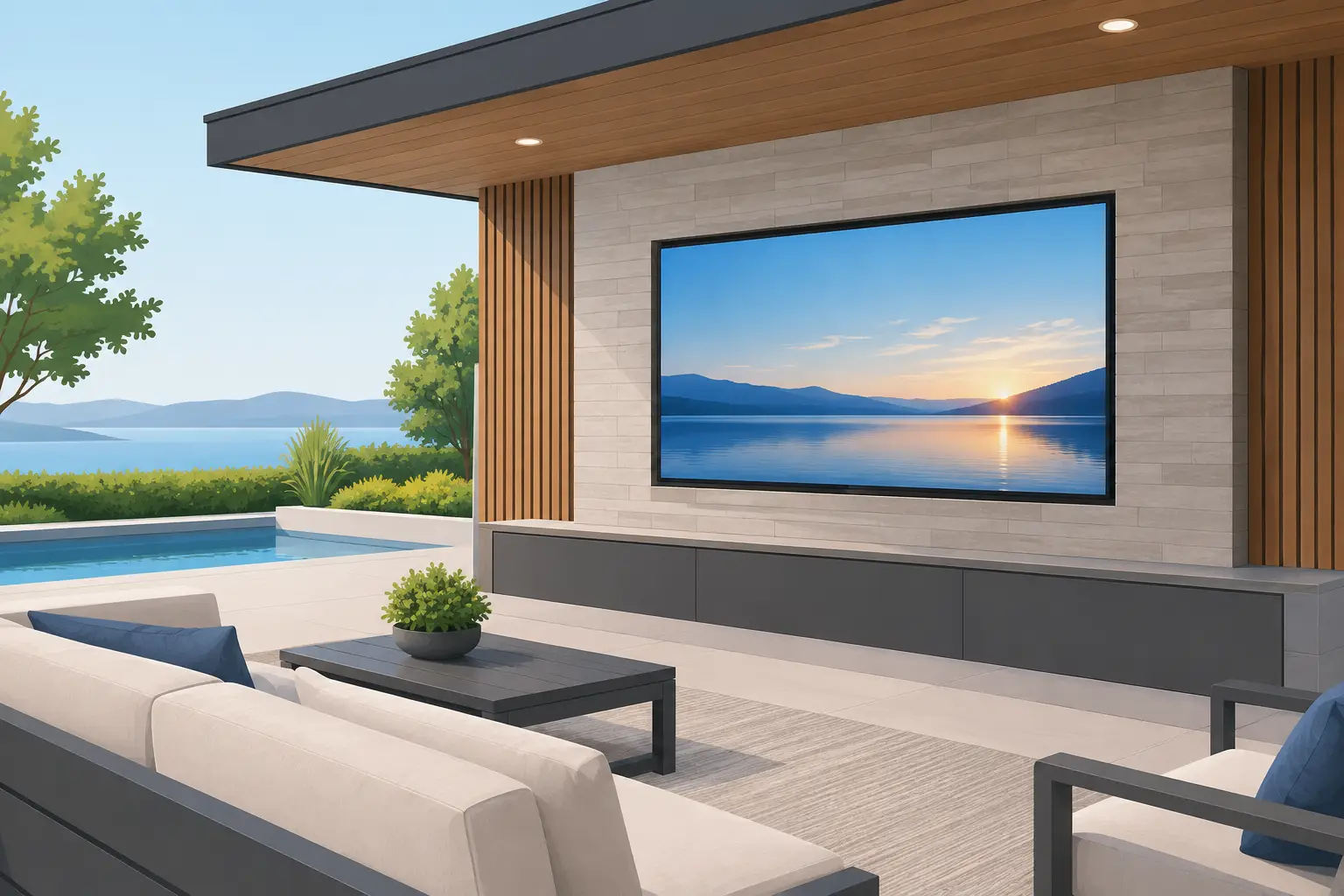
A patio TV should feel like part of the space, not like an indoor screen hurried outside before guests arrive. Thoughtful outdoor TV installation gives you a bright, comfortable picture, simple control, protected connections, and wiring that stays out of sight. The result is a deck, porch, pool area, or outdoor kitchen that is ready when you are.
For homes in Northeast Ohio, the details matter. A system may need to perform through humid summer evenings, wind-driven rain, freezing temperatures, and sharp seasonal swings. Choosing the right display is only one piece of the project. Location, mounting, power, network coverage, audio, and weather protection all work together to determine whether an outdoor TV remains enjoyable year after year.
Start With How the Space Will Be Used
The best location is not always the first open wall. Start by considering where people sit, when the space gets used most, and what they will watch. A covered porch used for weekend games has different needs than a poolside lounge used in the afternoon or an outdoor kitchen where the TV is viewed while people move around.
Viewing distance helps determine screen size, but it should not be the only consideration. A larger screen may be easier to see from across a patio, yet a poorly placed large display can still be difficult to watch when sunlight hits it directly. The goal is a natural sightline from the main seating area, without forcing guests to turn their heads or compete with glare.
If the TV will share a wall with a fireplace, grill, or cooking surface, heat and clearance need careful attention. Electronics should not be placed where they will be exposed to excessive heat, smoke, or grease. A professional site review can identify these conflicts before a mount, outlet, and cable path are installed.
Choose a Display Made for Outdoor Conditions
An indoor television can be tempting because it costs less upfront. Outdoors, however, it is usually a short-term compromise. Indoor sets are not designed for moisture, temperature changes, insects, dust, or prolonged exposure to bright ambient light. Even under a roof, condensation and humidity can affect a standard TV over time.
An outdoor-rated television is built for the environment it will face. Its enclosure, components, and connections are designed to tolerate changing weather, while its higher brightness helps the picture remain visible outside. The right category depends on the setting:
- Full-shade displays work well on deeply covered porches and enclosed outdoor rooms with limited natural light.
- Partial-sun displays suit patios and covered areas that receive indirect light or some morning and evening sun.
- Full-sun displays are intended for locations with sustained direct daylight and require especially careful mounting and power planning.
- Weatherproof TV enclosures can be an option in select applications, though they add visual bulk and may affect ventilation, access, and viewing quality.
Brightness is often more useful than chasing the highest resolution. A clear 4K image means little if reflections wash it out at noon. Before selecting equipment, observe the space at the times you expect to use it most. Afternoon glare can be very different from the conditions you see during an early evening walkthrough.
Outdoor TV Installation Needs a Clean, Protected Foundation
A polished installation starts behind the screen. The mount must be rated for the TV’s weight and the mounting surface, whether it is masonry, siding, wood framing, stone veneer, or a structural post. It also needs to hold the display securely while allowing appropriate service access.
A fixed mount offers the cleanest profile when the viewing position is consistent. A tilting mount can improve visibility when the TV is installed higher than eye level. An articulating mount is useful when viewers sit in more than one area, but it needs a well-managed cable plan so movement does not strain cords or expose wiring.
Power should be planned, not improvised with an extension cord. A properly located outdoor-rated electrical outlet and protected cable route make the installation safer, cleaner, and easier to maintain. Low-voltage wiring for video sources, network connectivity, and audio should be routed in a way that protects it from moisture, physical damage, and future construction work.
For new builds and major renovations, this is the ideal time to plan conduit. Conduit creates a protected pathway for present-day cables and gives you options later if equipment changes. It is a small decision during construction that can prevent unnecessary wall or ceiling work down the road.
Plan for Wi-Fi Before the First Game Starts
Streaming is now the primary source for many outdoor TVs. That makes reliable Wi-Fi part of the entertainment experience, not an afterthought. A phone may show a signal on the patio and still struggle to stream a live event in high quality. Walls, masonry, metal, landscaping, and distance from the main router can weaken performance.
A professionally designed Wi-Fi system considers coverage where people actually use devices. Depending on the property, the solution may include a carefully placed access point, a wired network connection at the TV, or improvements to the broader home network. Wired connectivity is often the most consistent option when the cable path is practical, particularly for a fixed outdoor entertainment area.
It is also wise to decide where streaming devices will live. Some outdoor TVs include built-in apps, which can keep the setup simple. Others benefit from an external media player stored in a protected compartment or indoor equipment location. The right approach depends on the features you want, the ease of remote control, and how exposed the equipment will be.
Do Not Let Outdoor Audio Become an Afterthought
TV speakers tend to get lost outdoors. Open air does not contain sound the way an indoor room does, and fans, conversation, traffic, and pool activity can quickly overpower a small built-in speaker.
The answer is not simply turning the volume up. Thoughtfully placed outdoor speakers can provide clearer sound at a comfortable level, so guests near the patio can hear dialogue without sending noise across the neighborhood. For larger areas, multiple speakers spread at lower volume usually create a more even and pleasant result than one loud source.
Audio design should match the space and its use. A compact covered porch may need only a simple pair of weather-rated speakers. An outdoor kitchen and patio may benefit from separate audio zones, allowing music in one area while the TV plays in another. The controls should remain easy enough that anyone in the home can use them without sorting through several remotes.
Make Everyday Control Simple
Outdoor entertainment should not require a troubleshooting session. A well-designed system can bring TV, streaming, and audio controls into one straightforward experience. That may mean a weather-conscious remote, a wall-mounted control in a protected location, or an app that works reliably from the patio.
Keep equipment choices practical. Every additional device introduces another power source, another update, and another possible point of confusion. The best setup is often the one that provides the features your household uses most while keeping the daily routine simple: turn it on, select what you want to watch, adjust the sound, and enjoy the space.
For homeowners who entertain often, integrating the outdoor TV with existing whole-home audio can make transitions easier. Music can move from the kitchen to the patio, or the game can take priority outdoors while the rest of the home stays independent. The system should fit the way the home is already lived in.
Protect the Investment Through Every Season
Outdoor-rated equipment is designed for the elements, but it still benefits from sensible care. Keep the screen clean with manufacturer-approved materials, inspect visible connections periodically, and avoid blocking ventilation areas. If furniture, plants, or seasonal décor shift around the TV, make sure they do not trap heat or direct water toward the equipment.
A cover can provide additional protection when the display is not in use, provided it is designed for the TV and does not retain moisture. In exposed locations, a cover is particularly useful during periods of heavy pollen, blowing debris, or extended time away from home.
Professional support also matters after installation. Software updates, streaming changes, network adjustments, and seasonal troubleshooting are easier to manage when the system has been documented and installed with service access in mind. Tri-County Technology designs outdoor entertainment systems with that long view, so the technology remains a source of comfort rather than another weekend project.
A well-planned outdoor TV does more than put a screen on the patio. It gives the space a purpose: a place for quiet mornings, family movies, neighborhood cookouts, and the game everyone wants to watch. Start with the environment, build the infrastructure correctly, and the experience will feel easy from the first warm evening to the next.


No responses yet