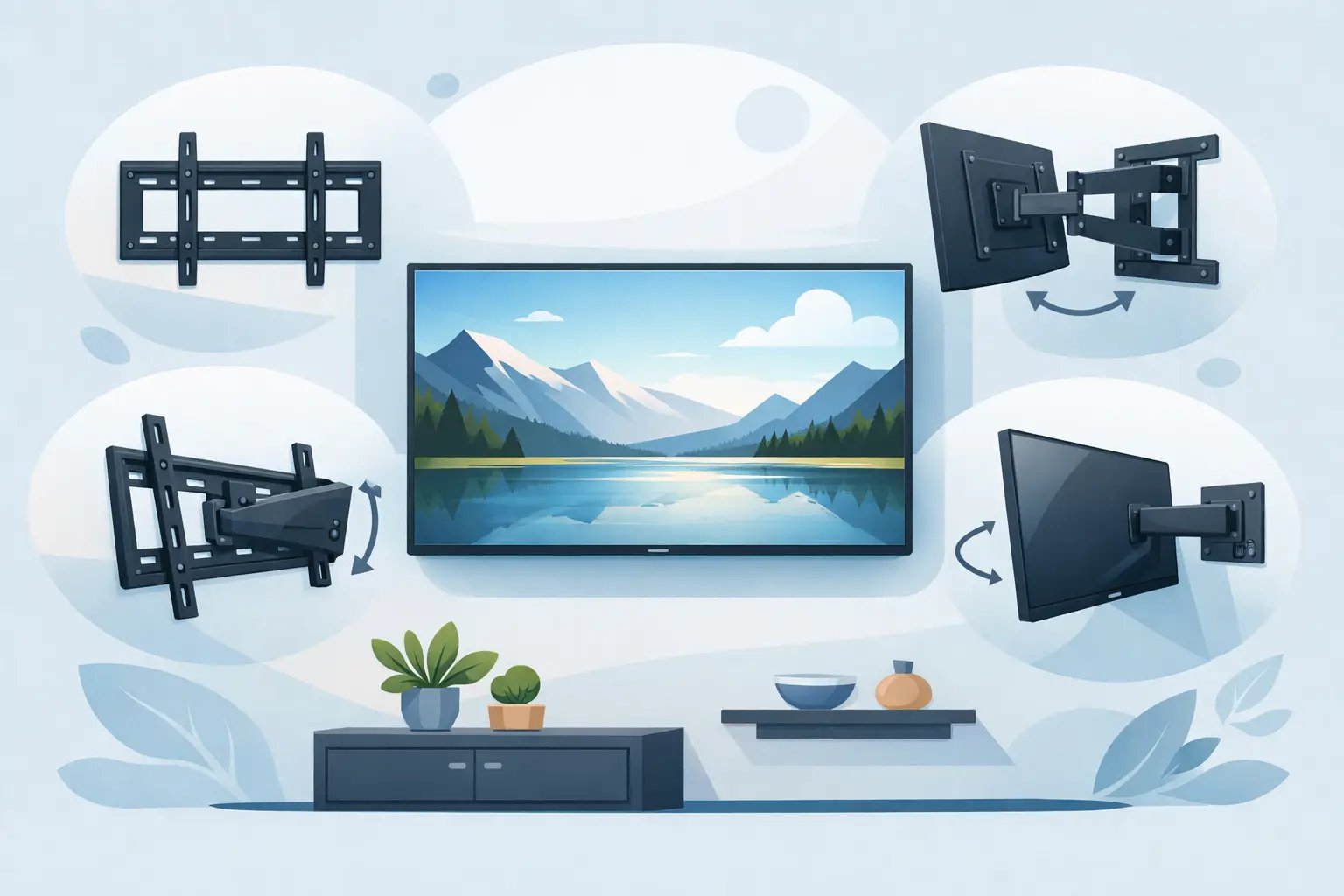
A television can be the visual center of a room, or it can quietly disappear into a clean, comfortable setup. The difference often comes down to choosing the right TV wall mount types before the screen ever goes on the wall. A mount that suits the room makes everyday viewing easier, keeps cables out of sight, and lets the display feel intentional rather than added on at the last minute.
The best choice is not always the flattest or most adjustable mount. It depends on where people sit, how the room is used, the size and weight of the TV, and what needs to connect behind it. A thoughtful installation considers the full picture, from viewing angle to power, wiring, sound, and future service needs.
The Main TV Wall Mount Types
Most residential and small-business installations begin with one of four mount styles: fixed, tilting, full-motion, and ceiling mounts. Each solves a different problem, and each has trade-offs worth understanding.
Fixed mounts for a clean, low-profile look
A fixed mount holds the television close to the wall and does not move. It is often the right fit when the TV is installed at a comfortable, straight-on viewing height and the seating position is directly in front of the screen.
This style creates the most streamlined appearance. It works especially well in living rooms, bedrooms, offices, and media spaces where the display is the focal point but does not need frequent adjustment. A fixed mount can also be a practical option for a TV positioned above a low cabinet, where the screen is naturally near eye level.
The trade-off is access. With the television close to the wall, connecting or changing cables later can be more difficult unless the installation is planned properly from the beginning. Recessed connection boxes, organized low-voltage wiring, and the right cable lengths help preserve the clean look without making future updates frustrating.
Tilting mounts for higher TV placement
A tilting mount allows the bottom of the television to angle outward slightly. That simple adjustment can make a meaningful difference when a TV must be mounted higher than ideal eye level.
For example, a television above a fireplace mantel often benefits from a tilting mount. The downward angle can reduce glare and improve the viewing experience for people seated below. It can also make rear connections more accessible than a fixed mount allows.
Tilting is helpful, but it does not solve every high-placement issue. If a screen is mounted too high, viewers may still experience neck strain even when the display is angled down. Before choosing this option, consider whether the room layout allows the TV to be placed lower or whether a different furniture arrangement would create a more comfortable result.
Full-motion mounts for flexible viewing
A full-motion mount, sometimes called an articulating mount, can extend away from the wall, swivel side to side, and tilt up or down. It is the most flexible of the common TV wall mount types and a strong choice when the screen needs to serve more than one seating area.
These mounts are useful in open-concept homes, kitchens, bedrooms, and multipurpose spaces. A TV can face the sofa for movie night, then turn toward the kitchen island while dinner is being prepared. In a small business setting, a display may need to angle toward a conference table for a meeting and toward another area for day-to-day visibility.
That flexibility requires more planning. The mount must be rated for the TV’s size and weight, and the wall structure must support the additional leverage created when the screen extends outward. Cable management also matters more because cables need enough slack to move with the mount without pulling, pinching, or becoming visible.
A full-motion mount is not automatically the premium choice for every room. If the TV will rarely move, a fixed or tilting mount may look cleaner, cost less, and provide a simpler long-term setup.
Ceiling mounts for unconventional spaces
Ceiling mounts suspend a television from above and are less common in a typical living room, but they can be a smart solution where wall space is limited or unsuitable. They may be used in finished basements, workout areas, commercial spaces, or rooms with extensive windows, built-ins, or stone features.
Many ceiling mounts offer tilt and swivel adjustments, allowing the TV to be aimed toward the main viewing area. The key consideration is structural support. A ceiling mount should attach to framing designed to carry the load, not simply to drywall or a decorative surface. Because the installation is highly visible, careful wire routing is also essential for a finished appearance.
Match the Mount to How the Room Is Used
The right mount starts with a simple question: where will people actually watch? A family room with one primary sofa has different needs than a great room with seating spread across several zones. A bedroom TV may be viewed from a bed at a slight angle, while a kitchen display may need to turn between the breakfast table and food-prep area.
Viewing height matters just as much. For most seated viewing, the center of the screen should be near eye level. This is a guideline, not a rigid rule. Screen size, furniture height, room dimensions, and personal preference all play a part. Still, placing a television too high is one of the most common reasons a finished room feels less comfortable than expected.
Glare is another practical factor. Windows, overhead fixtures, and reflective surfaces can affect picture quality throughout the day. A tilting or full-motion mount can help in some rooms, but thoughtful screen placement is usually the better first move. It is easier to avoid glare than to compensate for it after installation.
Installation Details That Matter as Much as the Mount
A wall mount is only as dependable as the structure and planning behind it. TV size alone does not determine whether a mount will work. The display’s actual weight, its VESA mounting pattern, the wall material, stud location, and the mount’s rated capacity all need to align.
Wood studs are common in many homes and provide a reliable mounting point when properly located. Metal studs, masonry, stone, and fireplace surrounds require a different approach. Some surfaces need specialized hardware, added reinforcement, or a location change to support the display correctly. A professional assessment is especially valuable when the wall is finished with tile, brick, stacked stone, or custom millwork.
Power and connections deserve attention before the screen is installed. A polished result should not depend on cords draped down the wall or equipment crowded into an inconvenient corner. Planning for an outlet behind the TV, in-wall rated cabling where appropriate, and a path for future connections keeps the installation clean and serviceable.
For a TV connected to a soundbar, streaming device, gaming console, cable box, or whole-home audio system, the mount should support the complete setup rather than just the display. Sometimes that means choosing a mount with easier rear access. In other cases, it means locating equipment in nearby cabinetry or a structured wiring area so the room stays uncluttered.
Consider Service Access and Future Changes
Technology changes faster than walls do. A mount that looks perfect on installation day should also allow for reasonable service when a cable needs replacement, a new source is added, or the TV is upgraded later.
Fixed mounts can work beautifully when the wiring is well organized and the television can be removed without disturbing the wall. Tilting mounts often provide more space for hands and connectors. Full-motion mounts offer the easiest access while extended, though their moving arms require cables to be routed with extra care.
For new construction and renovations, this is the ideal time to think beyond the current display. Running appropriate wiring, planning equipment locations, and providing accessible pathways can prevent costly wall repairs later. In an existing home, a well-designed retrofit can still produce a refined result without turning the project into a major disruption.
When Professional Mounting Is Worth It
A basic television installation may look straightforward, but the details add up quickly. Finding the right structural support, setting a comfortable height, protecting finished surfaces, concealing wiring, and confirming that the system works reliably all affect the final experience.
For large displays, stone or masonry walls, above-fireplace installations, full-motion mounts, or integrated entertainment systems, professional installation brings welcome peace of mind. Tri-County Technology approaches TV placement as part of the room, not as a standalone bracket on a wall. That means the screen, wiring, connected equipment, and daily use are considered together.
A TV should be easy to enjoy, not something you need to adjust around. Choose the mount style that supports how you live in the room, plan the wiring before the screen goes up, and let the finished space feel calm, clean, and ready when you are.


Comments are closed