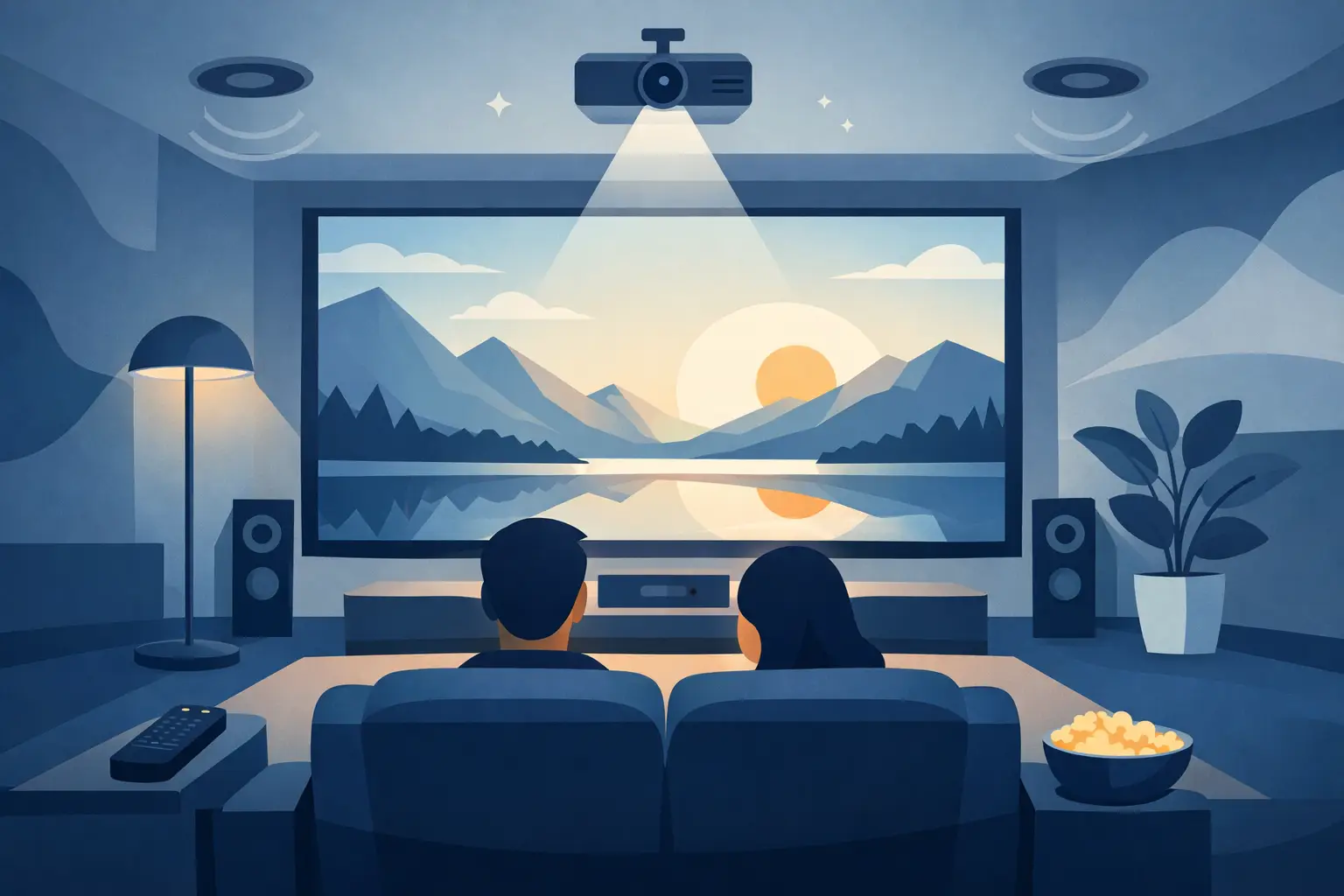
Movie night should not begin with hunting for remotes, adjusting a receiver, or asking why the dialogue is harder to hear than the music. A well-designed home theater makes the experience feel natural: choose what you want to watch, settle in, and enjoy a picture and sound system that simply works.
That result is less about buying the largest screen or the most expensive speakers. It comes from thoughtful planning around the room, the people who use it, and the way the system will fit into everyday life. Whether you are building a dedicated media room, finishing a basement, or improving a living room, the best theater is the one that feels comfortable, clear, and easy to control.
Start With How the Room Will Be Used
A dedicated theater room gives you the most control over lighting, speaker placement, seating, and acoustics. It is a strong choice for homeowners who want a true cinematic setting, often with a projector, larger screen, and carefully placed surround sound. The trade-off is that a dedicated room has one primary purpose, so it may not be the right use of space for every home.
A multipurpose media room is often more practical. It can support family movie nights, big games, casual television viewing, and everyday gathering. These spaces need a system that performs well in varying light conditions and remains visually clean when it is not the center of attention. A bright television may make more sense than a projector in a room with large windows or frequent daytime use.
Before selecting equipment, consider a few basic questions. How many people will usually watch? Will the room be used mostly at night, or throughout the day? Are you creating a space for movies, sports, gaming, or all three? The answers shape nearly every other design choice.
Dedicated theater or media room?
The difference is not about prestige. It is about priorities. A dedicated space can create a more immersive experience because the environment is controlled. A media room offers greater flexibility and can still deliver excellent performance with the right display, audio design, and lighting plan.
For new construction, discussing the room early with a technology integrator and builder can prevent expensive changes later. Wiring, power locations, speaker backing, ventilation, and equipment storage are much easier to plan before drywall is installed. In a renovation, the same goals are possible, but the design may need to work around existing walls and finishes.
A Home Theater Is Built Around Picture, Sound, and Comfort
A theater should look impressive, but it should also be easy to live with. The right screen size, display type, speaker layout, and seating position depend on the room rather than a single formula.
Choose the display for the actual environment
A large television is often the most straightforward solution for a living room or flexible media space. Today’s displays offer bright, detailed images and work well when sunlight enters the room. They also require less planning for projector alignment and screen placement.
A projector can create a larger, more cinematic image, especially in a dedicated room with controlled light. However, projector performance depends on the screen, ambient light, room finishes, and viewing habits. Darker walls and effective window treatments can improve contrast dramatically. If the room needs to be bright and active during the day, a projector may require more compromise than expected.
Viewing distance matters as much as screen size. A screen that is too small can feel underwhelming, while one that is too large for the seating position can become tiring to watch. A professional design considers the room dimensions and preferred content so the image feels engaging instead of overwhelming.
Make dialogue easy to understand
Many people assume better sound means louder sound. In practice, clear dialogue is usually the bigger improvement. Proper speaker placement, a well-matched center channel, and room-aware calibration help voices remain distinct without turning every scene into a wall of volume.
Surround sound can make a room feel more immersive, but it works best when speakers are positioned intentionally. Speakers hidden in the wrong locations may look tidy while producing an uneven listening experience. The goal is not to fill the room with hardware. It is to create sound that feels balanced from the seats people actually use.
Acoustics also deserve attention. Hard floors, bare walls, and large glass surfaces can reflect sound and make a system feel harsh. Rugs, upholstered seating, drapery, and purpose-selected acoustic treatments can help control reflections without making the room look like a recording studio. The right approach depends on the architecture and the level of performance you want.
Plan seating before finalizing the system
Seating affects viewing angles, speaker placement, and traffic flow. A single row may be ideal for a smaller room, while a larger theater can support multiple rows or a raised platform. Keep sightlines in mind, especially when recliners, sectional seating, or a bar-height rear row is part of the plan.
Comfort extends beyond the chairs. Consider where drinks will sit, how people enter the room, where blankets or gaming accessories will go, and whether equipment noise could distract from quiet scenes. These details are what make a room inviting enough to use often.
Simple Control Makes the Experience Better
The most polished theater technology disappears into the routine. One intuitive interface should handle the basic actions people use every day: turn the system on, select a source, adjust volume, and control the room environment. No one should need a printed instruction sheet to start a movie.
This is where professional integration adds practical value. The display, audio components, streaming devices, lighting, and motorized shades can be designed to work together in a logical sequence. Pressing “Movie” might prepare the room, start the display, select the right source, and set the sound system to the correct mode. The technology is still capable, but the experience stays simple.
Reliability starts behind the scenes. Equipment should have adequate ventilation, organized wiring, labeled connections, and a stable network connection. A clean equipment location also keeps the room from becoming crowded with visible components and loose cables. These details make future service, upgrades, and troubleshooting much easier.
Do Not Treat Wi-Fi as an Afterthought
Streaming quality is only as dependable as the connection delivering it. A theater may rely on streaming devices, game consoles, control systems, and other connected equipment, all competing for bandwidth. Weak coverage or poorly placed networking equipment can lead to buffering, dropouts, and frustrating delays.
Whenever possible, hardwired network connections are a smart choice for fixed theater equipment. They provide consistent performance and reduce dependence on wireless conditions. A properly designed Wi-Fi system remains essential for phones, tablets, and portable devices, but the components that stay in one place benefit from a dependable wired connection.
For homes in Northeast Ohio, this is especially relevant in larger homes, finished basements, and additions where a standard router may not cover every space well. Planning connectivity as part of the project helps the theater perform consistently long after installation day.
Build for the Next Upgrade, Not Just Tonight
Technology changes, but the infrastructure behind it should have a longer life. Conduit pathways, accessible equipment locations, quality cabling, and extra capacity can protect your investment when you want to add a new source, replace a display, or expand the system later.
This does not mean every project needs every possible feature on day one. A phased plan is often the right answer. You might install wiring and speaker locations during construction, then begin with a television and a focused audio system. Later, the room can grow without reopening finished walls or starting over.
A well-designed home theater does more than show a great movie. It gives your household a place to gather, relax, and enjoy the moments worth sharing – with technology that stays comfortably in the background.


Comments are closed