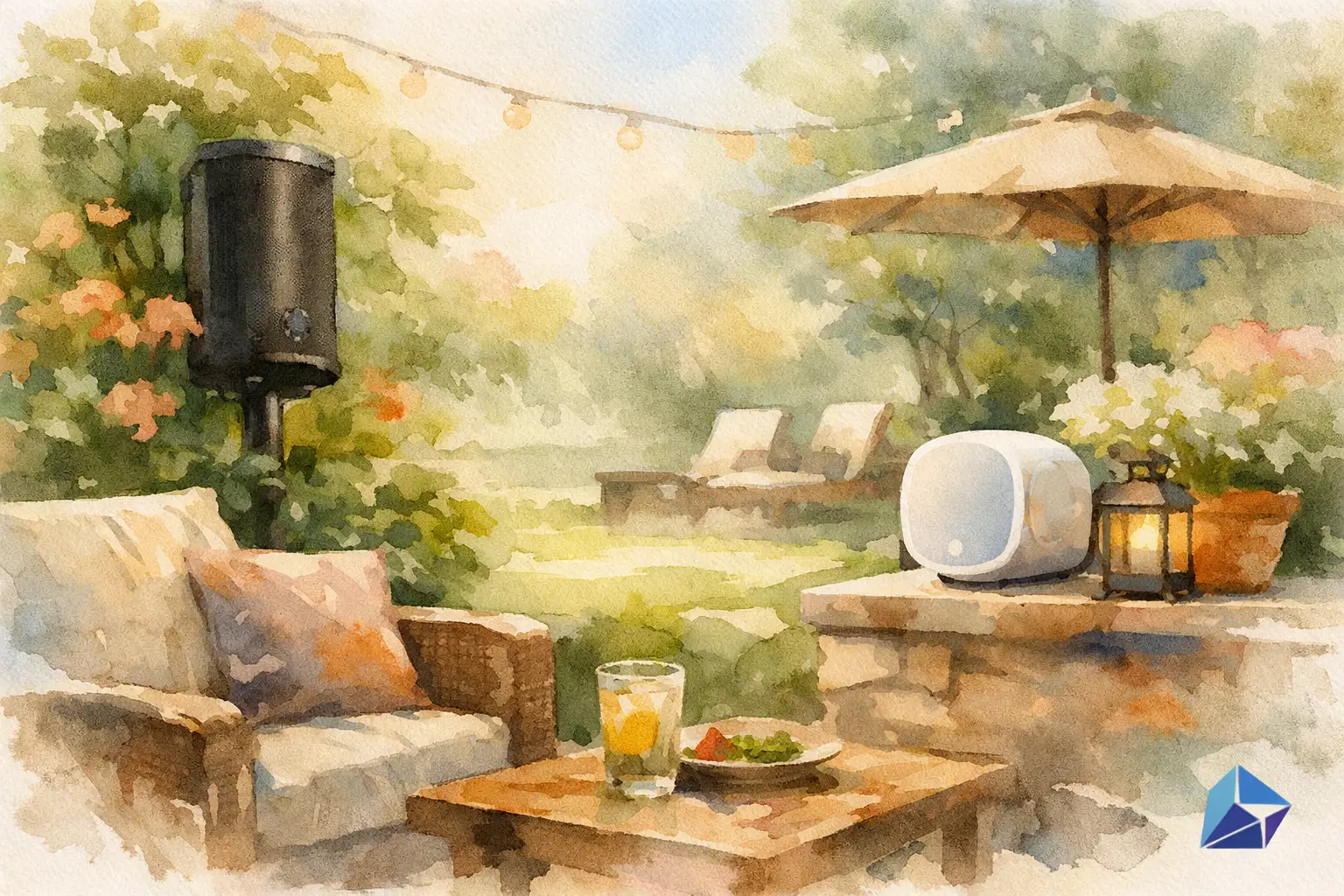
A patio can look finished long before it feels finished. The difference is often sound: music that reaches the seating area clearly, carries naturally toward the grill, and stays comfortable enough for conversation. The best patio speaker options are not simply the loudest products on the shelf. They are the systems that suit the size of the space, the way you entertain, and the level of permanence you want from your outdoor setup.
For homeowners planning a new patio, pool area, porch, or backyard renovation, the right approach starts with coverage and control rather than a single speaker specification. A well-designed outdoor audio system should feel easy to use, look appropriate for the landscape, and remain dependable through changing Northeast Ohio weather.
What Makes a Patio Speaker System Work Well?
Outdoor sound behaves differently than sound inside a room. Indoors, walls and ceilings help contain audio. On a patio, sound has open air, wind, traffic, landscaping, and neighboring homes to contend with. A single powerful speaker may create volume, but it can also create uneven coverage: too loud near the house and too quiet at the far end of the patio.
The better solution is usually more speakers playing at a lower, more comfortable level. This spreads sound evenly across the area, improves clarity, and reduces the urge to turn the system up. It is a thoughtful choice for relaxed dinners, family gatherings, and evenings when you want music to stay in your space rather than becoming the soundtrack for the entire block.
Weather resistance matters just as much. Outdoor-rated speakers are designed to handle moisture, temperature swings, UV exposure, and dust. That does not mean every speaker should be placed where it receives direct rain or constant sprinkler spray. Proper placement, secure mounting, protected wiring, and equipment selected for the environment all contribute to long-term reliability.
Best Patio Speaker Options by Space and Style
There is no single best speaker type for every backyard. The best choice depends on whether you are building a dedicated entertainment area, updating an existing patio, or looking for flexible sound without permanent installation.
Surface-Mount Speakers for Covered Patios and Porches
Surface-mount speakers are the familiar rectangular or rounded speakers installed under an eave, on a wall, or beneath a covered porch ceiling. They are a practical option for patios near the home because they can direct sound toward the seating area while staying somewhat sheltered from the elements.
These speakers work especially well for smaller to medium-sized patios, screened porches, and outdoor kitchens. Their placement can be adjusted to keep sound focused where people gather. A pair may be enough for a compact covered space, while a larger patio often benefits from two pairs placed farther apart.
The trade-off is visibility. Even attractive outdoor speakers are still noticeable on siding, brick, or ceiling structures. For homeowners who prioritize a clean architectural look, a more discreet landscape solution may be a better fit.
Landscape Speakers for Broad, Even Coverage
Landscape speaker systems are often the strongest choice for larger patios, pool decks, fire pit areas, and yards where people move between several outdoor zones. Small satellite speakers can be placed in planting beds or along the edge of the hardscape, aimed inward toward the listening area. A buried or hidden outdoor subwoofer can add depth without placing a large speaker box on the patio.
This design creates even sound throughout the space. Rather than relying on two loud speakers mounted on the house, several low-profile speakers surround the area with balanced audio. It is particularly effective for entertaining because guests can hear music whether they are sitting at the table, standing near the grill, or relaxing by the fire.
Landscape systems require more planning and professional wiring, especially if the yard has irrigation, retaining walls, mature landscaping, or future construction plans. The result, however, is a polished system that blends into the property and performs well over a larger footprint.
Rock and Planter Speakers for Natural Camouflage
Rock-style and planter-style speakers offer another way to bring sound into the landscape with less visual distraction. They can be useful where a conventional satellite speaker would look out of place, such as around garden beds, pool landscaping, or a natural stone patio.
Their appearance is their main advantage, but performance still depends on placement. A camouflaged speaker should not be tucked behind dense shrubs or positioned so far from the seating area that it must play too loudly. Used thoughtfully, these speakers can supplement a broader outdoor system or provide sound in a distinct area of the yard.
Portable Speakers for Flexible, Casual Listening
A quality portable Bluetooth or Wi-Fi speaker makes sense for renters, occasional outdoor use, or homeowners who want music for a small patio without running wire. It can move from the kitchen to the deck, travel to the park, and store indoors when the weather turns.
Portability comes with limits. A portable speaker typically cannot provide the even coverage, deeper bass, or simple whole-property control of a professionally installed system. It also needs charging, can be forgotten outside, and may require someone to manage the connection each time guests arrive. It is convenient, but it is not always the best long-term answer for a finished outdoor living area.
How Many Speakers Does a Patio Need?
The answer depends on the patio’s dimensions, layout, and listening goals. A small covered porch may only need two speakers. A larger patio with a dining table, lounge seating, and outdoor kitchen may need four or more speakers positioned around the perimeter. A backyard with a pool, fire pit, and patio may be better served by a landscape system with multiple satellites and a subwoofer.
Speaker count is not about making the system louder. It is about creating consistent, low-stress listening. More coverage points allow each speaker to work less hard, which improves comfort and helps preserve conversation. This is one of the most common differences between a basic outdoor setup and an outdoor audio system that feels intentional.
Don’t Overlook Source, Control, and Wiring
The speakers are only one part of the experience. Consider how you want to choose music and adjust volume when your hands are full or guests are already outside. Many homeowners prefer to use the music apps they already know from a phone or tablet, while others appreciate a dedicated wall control or an integrated smart home interface.
For larger properties, separate audio zones can make a meaningful difference. You may want music on the patio but not by the pool, or a lower volume near the dining area and a different source in a covered porch. Zone planning gives each area the right level of control without adding daily complexity.
The equipment that powers the speakers also deserves a protected location. Amplifiers and source components are generally installed indoors, in a conditioned utility area, equipment rack, or another suitable space. This keeps sensitive electronics away from heat and moisture while making service and future upgrades easier.
Wiring should be planned early whenever possible. For new construction and major renovations, running outdoor-rated cable before patios are poured and landscaping is completed avoids unnecessary disruption later. Retrofit installations are also very achievable, but a site review helps identify clean wire paths and practical speaker locations before work begins.
Choosing for Ohio Weather and Real Life
Ohio patios experience more than a few sunny weekends. Freeze-thaw cycles, humid summers, rain, snow, and direct sun can all shorten the life of poorly selected equipment. Choose speakers specifically rated for outdoor installation, use purpose-built cabling and connections, and avoid treating a covered location as fully weatherproof.
It also helps to plan for the way the space will change. A patio that starts as a simple grill area may later include a pergola, television, fire feature, or expanded seating. Leaving room for additional speaker runs or selecting an amplifier with available capacity can make future improvements much simpler.
A professional design is especially valuable when outdoor sound needs to coexist with indoor audio, television audio, reliable Wi-Fi, or smart controls. Tri-County Technology helps homeowners create connected systems that remain simple to live with, without filling the patio with visible equipment or confusing controls.
A Better Starting Point Than “Which Speaker Is Best?”
Before choosing a model, stand on the patio and picture an ordinary Saturday evening. Where do people sit? Where do they cook? Will music play quietly during dinner, or support larger gatherings? Do you want speakers to disappear into the landscape, or is a covered porch installation more practical?
Those answers point toward the right system faster than a feature list ever will. A well-planned patio audio system should let you press play, enjoy the space, and give the technology very little thought after that.


Comments are closed