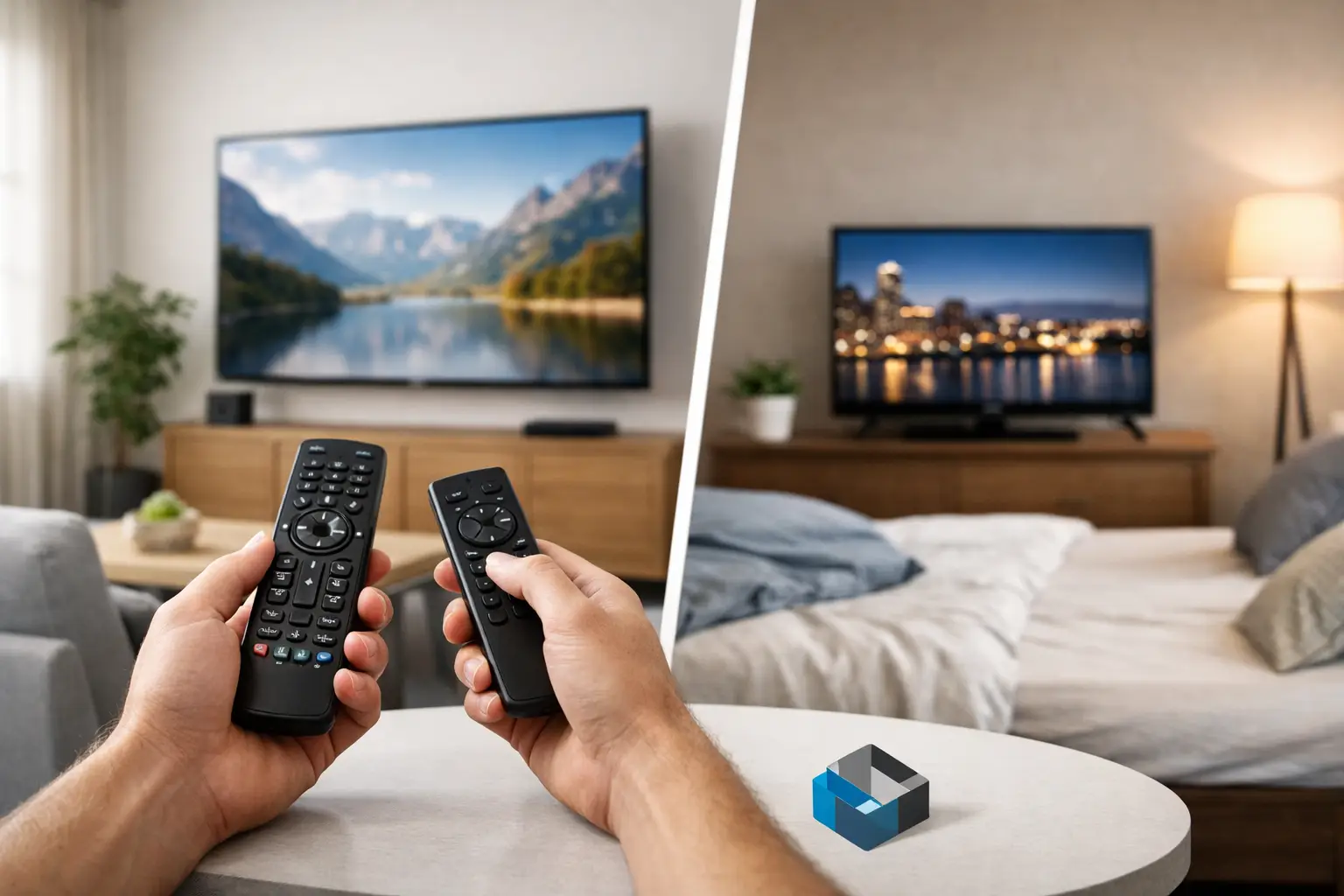
A TV can look perfect on a showroom wall and still feel wrong the minute it lands in your living room. Too bright at night. Too small for the wall. Great picture, frustrating menu. If you’re wondering how to pick the right TV, the best place to start is not the spec sheet. It is the room, the people using it, and how you actually want the space to feel day to day.
For most homes, the right TV is the one that disappears into the routine. It turns on quickly, looks good in the lighting you already have, sounds clear enough to follow, and fits the room without dominating it. That sounds simple, but getting there takes a little more thought than just choosing the biggest screen on sale.
How to pick the right TV starts with the room
Screen size matters, but room layout matters more. A 75-inch TV may sound impressive, yet it can feel overwhelming in a smaller family room or bedroom. On the other hand, a screen that is too small often leads to constant volume increases, eye strain, and a setup that never feels quite satisfying.
Start with viewing distance. If your main seating is around 7 to 9 feet from the screen, many households find that 55 to 65 inches feels comfortable. At 9 to 11 feet, 65 to 75 inches often makes more sense. Those are not rigid rules, but they are a solid reality check when you are narrowing down options.
Wall space is just as important. Measure the width of the wall, nearby windows, and furniture below the TV. A screen can technically fit while still looking crowded. If the room is designed for comfort and clean lines, the TV should feel proportionate to the space around it.
Mounting also changes the experience. A professionally mounted TV can improve sightlines, reduce glare, and keep cords out of sight. If the screen will sit above a fireplace or in a bright great room, placement becomes even more important because the wrong height or angle can make even a high-end TV uncomfortable to watch.
Choose picture quality based on real viewing habits
This is where many buyers get pulled into jargon. Resolution, refresh rate, panel type, HDR formats – these things matter, but not all of them matter equally for every home.
For most buyers today, 4K is the practical standard. It gives you a sharp image, broad content support, and good long-term value. 8K exists, but for the average household it is still hard to justify. Content is limited, prices are higher, and the improvement is not always noticeable at normal seating distances.
Panel type has a bigger impact on everyday satisfaction. OLED TVs are known for rich contrast, deep blacks, and a very cinematic look. They can be an excellent fit in media rooms, darker spaces, or homes where movie nights are a priority. The trade-off is cost, and in some very bright rooms they may not be the most forgiving option.
LED and QLED models are often a strong choice for family rooms and sunlit spaces. They tend to handle brightness well and offer a wide range of price points. Some deliver excellent color and contrast, while others are more basic, so this category takes a little comparison. The key is to think about your room first. A TV that performs beautifully in controlled lighting may not look nearly as good next to large windows at 2 p.m.
If sports are important in your home, pay attention to motion handling and refresh rate. Fast movement can expose weaknesses in some lower-tier models. If you mostly stream dramas, news, and occasional movies, you may care more about color accuracy and contrast than high-performance motion processing.
Smart features should feel simple, not busy
A modern TV is also a streaming hub, control center, and often part of a broader connected home. That does not mean more features automatically create a better experience.
A good smart TV platform should be easy to navigate, responsive, and stable. If turning on the TV leads to a cluttered home screen, laggy apps, or a remote no one enjoys using, the technology starts adding friction to the room instead of convenience.
Think about the services you already use and whether the TV supports them well. Consider voice control if that fits your household, but only if it adds real ease. The goal is not to have every possible feature. The goal is to make everyday use feel natural.
This is especially important in homes with multiple users. Parents, kids, guests, and older family members all interact with the TV differently. A simpler interface usually wins over a more complicated feature set. In many cases, a well-chosen external streaming device can improve the experience, but if you want the cleanest possible setup, it helps to choose a TV with a smart platform that already feels intuitive.
Sound is part of the decision, not an afterthought
One of the most common disappointments with new TVs has nothing to do with the picture. As screens get thinner, built-in speakers often become less impressive. The image may look fantastic while dialogue sounds flat, weak, or difficult to understand.
If clear sound matters to you, plan for it from the beginning. In a smaller room, a quality soundbar may be enough to make TV watching much more enjoyable. In larger rooms or open-concept spaces, a more complete audio solution can create a fuller, more balanced experience.
This matters even more if the TV is part of a larger entertainment setup. If you want music, sports, movies, and streaming to all work together without a pile of remotes and visible wires, the TV should be chosen as one piece of a broader system, not as a standalone box. That is where thoughtful design and installation can make a noticeable difference in how polished the room feels.
How to pick the right TV without overbuying
It is easy to pay for features you will never use. It is also easy to buy too low and end up replacing the TV sooner than expected. The right balance comes from knowing which upgrades improve your daily experience and which ones mostly look good on a retail display card.
If you watch casually in a bedroom or secondary room, you may not need premium performance. Reliability, straightforward controls, and a clean install may matter more than chasing top-tier specs. For a main living area or dedicated media space, it can make sense to invest more because the TV gets used more often and expectations are higher.
Budget should also include the setup around the screen. Mounting, power placement, cable concealment, network strength, and sound all affect the final result. A less expensive TV with a clean, professionally planned installation often feels better than a more expensive model dropped into a room with visible wires, poor glare control, and weak Wi-Fi.
Don’t ignore installation and everyday usability
The purchase is only part of the experience. What happens after the TV comes out of the box often determines whether the system feels polished or frustrating.
If your Wi-Fi is inconsistent, streaming quality suffers. If the mount is poorly placed, the room never feels comfortable. If components are stacked without planning, the space quickly starts to look cluttered. These issues are especially common in remodels, open-concept homes, and rooms where homeowners want technology to blend in rather than stand out.
For homeowners in Northeast Ohio, seasonal lighting changes can also affect TV performance more than expected. A room that feels balanced in winter may have much stronger glare in summer. Thinking through placement, brightness, and shades before installation helps avoid regret later.
At Tri-County Technology, that is often the difference between a TV that simply works and one that actually fits the home. The screen matters, but so do the wiring, control, audio, and placement details that make the system feel easy to live with.
A practical way to narrow your options
If you are still deciding, simplify the process by answering a few real-world questions. Where will the TV go? How far away do you sit? Is the room bright or controlled? Do you mostly watch sports, movies, streaming shows, or all of the above? Will this TV be used on its own, or as part of a larger audio and smart home setup?
Those answers usually point you toward the right size, brightness level, audio needs, and smart features much faster than comparing dozens of technical terms. They also help you avoid the two most common mistakes: buying with your eyes instead of your room, and buying for a store demo instead of everyday life.
The best TV is not always the biggest, thinnest, or most expensive. It is the one that feels right every evening when you sit down, press one button, and the room works the way it should.


Comments are closed