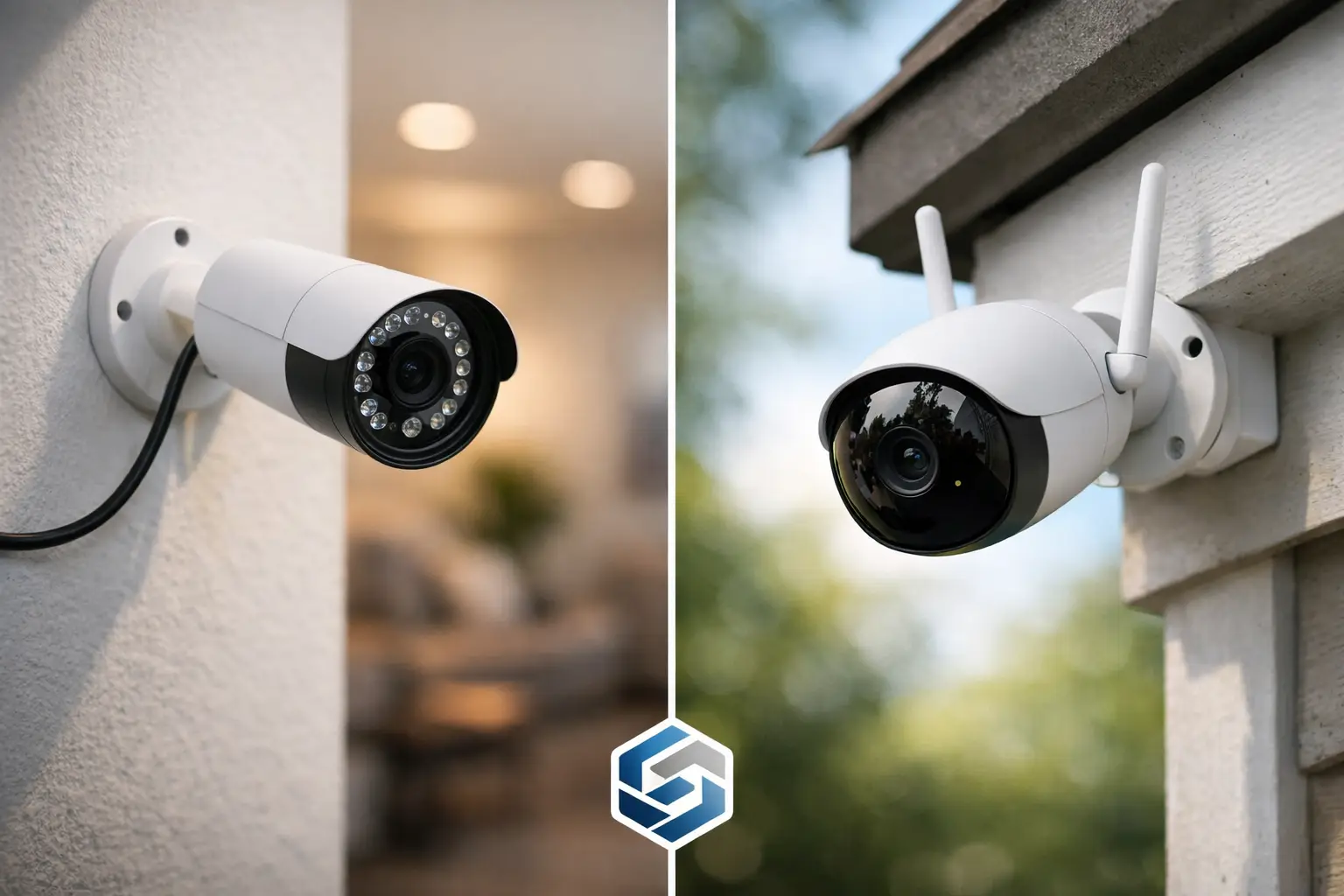
A security camera only helps when it records the moment you actually need to see. That is why the wired cameras vs wireless decision matters more than most people expect. On paper, both options promise visibility, alerts, and peace of mind. In real homes and small businesses, the better choice usually comes down to reliability, installation conditions, and how you want the system to fit into daily life.
Some buyers start with one simple assumption: wireless must be easier, and wired must be better. Sometimes that is true. Often, it is not that clean. The right answer depends on the property, the goals of the system, and whether you are building for quick coverage or long-term dependability.
Wired cameras vs wireless: what changes in daily use?
The biggest difference is not just how the camera connects. It is how the entire system behaves over time.
A wired camera typically uses physical cabling for data and power, often through Ethernet. That creates a direct, stable connection back to a recorder or network equipment. In practice, this usually means more consistent performance, fewer signal issues, and less day-to-day attention.
A wireless camera sends video over Wi-Fi, though it may still need power unless it is battery-operated. That can make placement easier in certain areas and reduce the need to open walls or run cable through finished spaces. For many homeowners, that flexibility is the main selling point.
The trade-off is straightforward. Wired systems ask for more planning up front. Wireless systems often ask for more tolerance later, whether that means recharging batteries, managing Wi-Fi dead zones, or troubleshooting a camera that fell offline after a router change.
When wired cameras make more sense
If the goal is dependable coverage with as few interruptions as possible, wired cameras usually have the advantage. This is especially true for larger homes, detached garages, long driveways, and small businesses where missing footage is not a small inconvenience.
Because wired cameras are not depending on Wi-Fi strength at each device, they tend to handle continuous recording better. They are also less likely to struggle when the network is busy with streaming, gaming, video calls, and the many smart devices already active in a modern home. If you want a system that quietly does its job in the background, wired often delivers that experience more consistently.
Wired setups also work well when aesthetics matter. A professionally designed installation can keep equipment organized, reduce visible power adapters, and avoid the pieced-together look that happens when cameras are added one by one over time. In new construction and major renovations, this option is especially attractive because the cabling can be planned before walls are closed.
That said, wired is not automatically the best choice for every property. Installation is more involved. In finished homes, running cable through brick, stone, plaster, or complex attic lines can increase labor and cost. If the camera location changes later, moving it may not be as simple as repositioning a battery-powered unit.
When wireless cameras are the better fit
Wireless cameras appeal to people who want coverage without a major installation project. That can be the right move in a townhouse, a finished home where cable paths are limited, or a smaller property that only needs a few strategic views.
They are also useful when flexibility matters. If you are testing placement, covering a side yard temporarily, or adding visibility to a spot that was not part of the original plan, wireless can be a practical solution. For some homeowners, a wireless system is the easiest way to start improving security now rather than waiting for a larger project.
The convenience is real, but so are the limits. Wireless cameras are only as dependable as the Wi-Fi network supporting them. If signal strength drops at the exterior wall, the camera performance drops with it. Battery-powered models add another layer of maintenance. A camera that needs charging at the wrong time is not providing peace of mind.
For lighter-duty use, wireless can work very well. For critical areas like front entries, cash handling spaces, parking lots, and perimeter coverage, buyers should think carefully about whether convenience is worth the potential compromise.
Reliability matters more than features
Many camera shoppers get pulled toward app features first: motion alerts, two-way audio, color night vision, person detection. Those features can be useful, but they should come after the basic question of whether the camera will stay online, record clearly, and capture what matters.
This is where wired cameras often earn their reputation. They are usually the stronger option for continuous uptime and stable video quality. Wireless systems can still perform well, but they depend on a healthy network environment. If the property already has weak Wi-Fi in the far corners, adding wireless security cameras does not solve that problem. It exposes it.
In many homes and small businesses, the best camera decision is actually tied to the network decision. If coverage is uneven, bandwidth is strained, or equipment placement is poor, a wireless camera system may frustrate the user even if the cameras themselves are well made.
Wired cameras vs wireless for installation cost
Cost is where the conversation gets more nuanced. Wireless cameras often look less expensive at first because the hardware is easy to buy and the setup appears simple. For a small number of cameras in easy locations, that can be true.
But lower entry cost does not always mean lower ownership cost. Battery replacements, charging routines, subscription storage plans, and performance upgrades to support weak Wi-Fi can all add up. If a wireless camera misses events or becomes unreliable, the real cost is the loss of confidence in the system.
Wired systems usually cost more at installation because labor and infrastructure are part of the project. The upside is that you are investing in a more permanent foundation. For many property owners, that upfront cost buys fewer compromises later.
There is also a middle ground. Some properties benefit from a hybrid approach, with wired cameras covering priority areas and wireless units filling in a few difficult spots. That can be a smart way to balance clean performance with practical installation constraints.
Choosing based on property type
The property itself usually points toward the best answer.
In a new build or major renovation, wired cameras are often the clear winner. The walls are accessible, the layout is being planned, and the owner can build security into the structure instead of layering it on afterward.
In an existing home, the answer depends on access and expectations. If the owner wants a polished, long-term system and the house allows for professional cable runs, wired is still a strong choice. If the home is fully finished and the need is modest, wireless may provide enough coverage without turning the project into a larger construction job.
For small businesses, wired typically makes more sense in areas where reliability is central to operations. Entry points, parking areas, customer-facing spaces, and inventory zones benefit from the consistency of a hardwired system. Wireless may still fit secondary spaces, but business owners usually have less tolerance for downtime and missed recordings.
In Northeast Ohio, weather also deserves a quick mention. Exterior cameras deal with seasonal swings, cold temperatures, and changing light conditions. That makes dependable power and connection even more valuable, especially for outdoor locations that are expected to work through winter without constant attention.
The better question is not which is newer
It is easy to assume wireless is the modern choice and wired is the old-school one. In reality, both are current technologies with different strengths. The better question is which system creates the least friction while delivering the level of performance you actually need.
If you want a camera system that is flexible, quick to deploy, and suitable for lighter coverage, wireless may be exactly right. If you want stronger reliability, cleaner infrastructure, and a system built to serve the property for years, wired is often the better investment.
For many buyers, the smartest move is to stop thinking only about cameras and start thinking about the full experience. How will footage be stored? Will the network support the system properly? Will the installation look clean? Will the cameras still feel easy to live with six months from now?
That is where professional planning makes a real difference. A good camera system should not feel like one more piece of tech to manage. It should feel dependable, intuitive, and quietly present when you need it.
If you are deciding between wired and wireless, focus less on the sales pitch and more on how the system will perform on your property, with your layout, and with your expectations. The best camera setup is the one that keeps security simple and dependable long after installation day.


Comments are closed