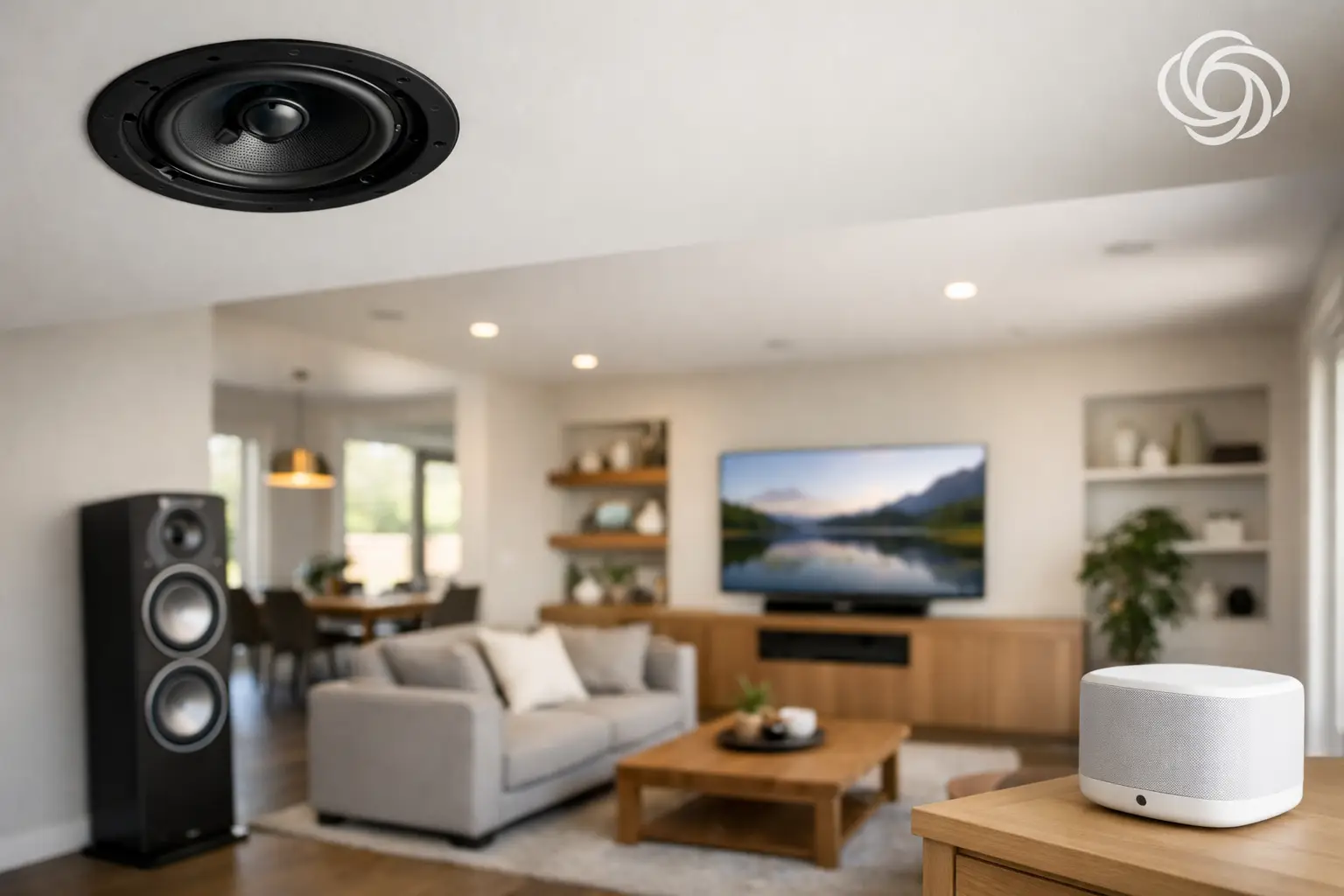
You usually notice a whole-home audio system when it is done poorly. Music drops between rooms, one app controls the kitchen while another controls the patio, and somebody always ends up fiddling with volume instead of enjoying the moment. The best whole house speaker system should feel much simpler than that. It should give you clean sound, easy control, and reliable performance that fits naturally into the way you live.
For most homeowners, the right system is not just about speaker brand or raw volume. It is about how the system is designed, where speakers are placed, how rooms are grouped, and whether everything works consistently day after day. That is why there is no single answer for every home. There is, however, a clear way to choose the right setup.
What the best whole house speaker system really means
A lot of people start by searching for a product. In practice, whole-home audio is a system, not a single box. It includes speakers, amplification, source options, network performance, control methods, and the installation details that make the experience feel polished rather than pieced together.
In one home, the best fit might be a few carefully planned zones with in-ceiling speakers in the main living areas. In another, it may include outdoor audio, a media room, and independent control for bedrooms, a home office, and a gym. The right answer depends on the layout of the house, how many people use it, and whether you are building new, remodeling, or upgrading an existing space.
That is also where trade-offs come in. Wireless systems can be fast to deploy and convenient in select rooms, but hardwired or professionally integrated systems usually offer better consistency, cleaner aesthetics, and more long-term flexibility. If your goal is dependable everyday use, that difference matters.
Wired, wireless, or hybrid
The first big decision is how the system connects.
A wired system is often the strongest choice for homeowners who want a clean, built-in result. In-ceiling or in-wall speakers can disappear into the room, wiring stays out of sight, and centralized equipment can keep the home looking uncluttered. Wired audio also tends to be more stable over time, especially in larger homes where network congestion can affect wireless performance.
A wireless system has appeal because it can be added room by room. That makes sense for smaller homes, apartments, or owners who want a lighter-touch upgrade. The downside is that wireless-only setups can become fragmented. You may end up with different generations of products, uneven sound quality, and control that feels less unified than it should.
A hybrid approach is often the sweet spot. Core living areas can use architectural speakers and dedicated amplification, while a few secondary spaces use wireless products where built-in speakers are not practical. When planned well, that gives you the performance of a custom system with flexibility where you need it.
Sound quality matters, but placement matters more
Homeowners often ask which speakers sound best. That is a fair question, but placement usually has a bigger effect on the final result than people expect.
A premium speaker in the wrong location can sound thin, uneven, or overly directional. A well-matched speaker placed correctly in the room often delivers better daily listening. Kitchens, open-concept living areas, bathrooms, and patios all behave differently. Ceiling height, room finishes, background noise, and furniture layout all influence what will sound right.
For example, a kitchen usually benefits from even coverage rather than one loud point source. A covered patio may need speakers positioned for clarity without sending sound into the yard or toward neighbors. A primary bedroom may call for a more relaxed setup with simple local control. Good design accounts for how the room is used, not just what can be installed there.
Control should be easy for everyone
One of the clearest signs of the best whole house speaker system is that nobody has to ask how to use it.
That usually means intuitive app control, simple room grouping, and fast access to favorite sources. You should be able to start music in the kitchen, add the dining room, lower the patio volume, and turn everything off without jumping through menus. If the system supports voice control, that should feel like an option, not a requirement.
Wall keypads can still be a smart choice in the right places. They are especially useful in main living areas, primary suites, and outdoor spaces where grabbing a phone is not always convenient. Good keypads keep things simple. Volume up, volume down, source select, and a favorite preset are often all you need.
This is where professionally integrated systems tend to stand apart. They are designed around the household, not around a stack of separate apps.
The network is part of the audio system
If audio cuts out, struggles to sync between rooms, or takes too long to respond, the speakers may not be the real issue. The network often is.
Whole-home audio depends on strong connectivity, especially when streaming services, smart TVs, video calls, and other devices are all active at the same time. A large house, older router, or poor Wi-Fi coverage can make a good audio system feel unreliable.
That is why system planning should include network evaluation from the start. In many homes, improving Wi-Fi coverage or structured wiring is what allows audio to perform the way it should. It is not the flashy part of the project, but it often makes the biggest difference in daily satisfaction.
Best whole house speaker system features worth prioritizing
It is easy to get distracted by long feature lists. In real homes, a few capabilities matter more than the rest.
Multi-zone control is the foundation. Different rooms should be able to play different content or join together when needed. Reliable streaming support matters too, since most households want quick access to their preferred music services, podcasts, and internet radio.
Source flexibility is also valuable. Some homeowners want to stream only. Others want TV audio distributed to select rooms, or they want a turntable or media source connected centrally. If that matters to you, plan for it early.
Finally, think about expandability. A system that works for your home today should still make sense if you finish a basement, add an outdoor living area, or remodel in a few years.
New construction versus retrofit
If you are building a new home or doing a major renovation, this is the easiest time to install a high-quality whole-home audio system. Wiring can be hidden cleanly, speaker locations can be coordinated with lighting and HVAC, and equipment spaces can be planned with service access in mind.
Retrofit projects can still produce excellent results. They just require a more careful approach. In an existing home, the best answer may involve selective speaker placement, creative wire paths, or a hybrid design that combines architectural speakers with wireless zones. The goal is not to force the same plan into every property. It is to create a system that looks intentional and works reliably without unnecessary disruption.
For homeowners in established Northeast Ohio neighborhoods, that flexibility can be especially important. Many homes were not originally designed with modern connected systems in mind, but they can still support elegant, easy-to-use audio with the right planning.
Choosing the right partner matters as much as choosing the equipment
Even strong products can disappoint when the design is rushed. Too many zones, poor speaker spacing, weak Wi-Fi, clumsy control, or a lack of user training can turn a promising system into a source of frustration.
A good integrator helps you make practical decisions before installation starts. That includes understanding how you listen, which rooms matter most, whether outdoor audio is part of the plan, and how simple the system needs to be for everyone in the household. It also means paying attention to the finish details – clean speaker alignment, organized equipment, and control that feels consistent from room to room.
That service piece is what turns audio from a product purchase into a better daily experience. Tri-County Technology approaches whole-home systems the same way it approaches other residential technology: keep it clean, keep it reliable, and make it easy to live with.
How to know you found the right system
The best system is not the one with the longest spec sheet. It is the one that matches your home and your routine.
If you want music in a few main spaces, there is no need to overbuild. If you entertain often, spend time outdoors, or want different family members using different zones at once, a more tailored design is worth it. If appearance matters, built-in speakers and hidden equipment may matter as much as sound quality. If reliability matters most, the network and control platform deserve just as much attention as the speakers themselves.
A well-designed whole-house speaker system should feel quiet in the best sense of the word. It should be there when you want it, simple when you use it, and forgettable when you do not. That is usually the clearest sign you chose well.


Comments are closed