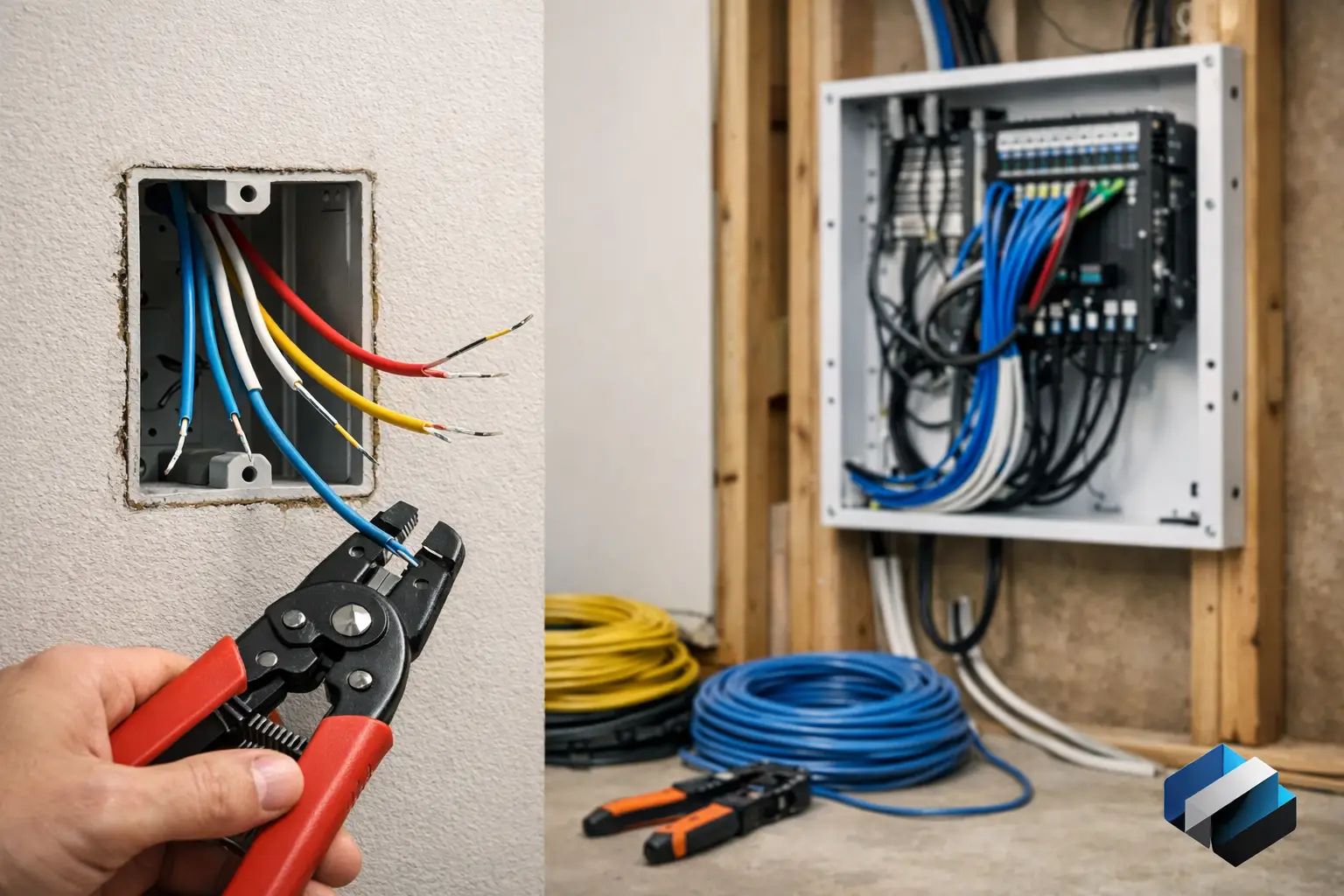
A few years after moving in is a frustrating time to realize your Wi-Fi drops in the office, the doorbell camera lags, and the TV wall has no clean path for cabling. That is why a residential low voltage wiring guide matters most before drywall goes up, or before a remodel closes everything back in.
Low voltage wiring is the part of the home’s infrastructure that supports communication, control, and entertainment systems without carrying standard household electrical power. It is the backbone behind strong network coverage, smart security, distributed audio, video distribution, and many of the convenience features homeowners now expect. When it is planned well, the technology feels quiet, reliable, and easy to use. When it is treated as an afterthought, it often turns into workarounds, visible wires, and systems that never feel fully finished.
What low voltage wiring actually covers
In a residential setting, low voltage wiring usually includes network cabling, speaker wire, video cabling, security and surveillance prewire, wiring for smart home controls, and structured cabling that ties everything back to a central location. Some homes need only a few well-placed data drops and television connections. Others call for whole-home audio, outdoor speakers, surveillance coverage, motorized shades, and strong wireless coverage across multiple floors.
The right scope depends on how the home will be used. A family that streams on several devices, works from home, and wants reliable outdoor cameras has very different needs than someone wiring a small condo for basic internet and one media room. The goal is not to fill the house with every available wire. The goal is to create a clean foundation for the systems that will genuinely improve daily life.
A residential low voltage wiring guide starts with lifestyle
The best plans do not begin with wire types. They begin with how people live.
Think about where TVs will actually be mounted, where desktop computers or gaming systems may sit, and where Wi-Fi struggles would be most disruptive. Think about whether music should reach the kitchen, patio, or primary bath. Think about how you want to answer the front door, check cameras while away, or control lights and shades without adding clutter to the walls.
This is where many projects go off track. Homeowners often wire for what they own today instead of how they want the home to function over the next five to ten years. A good plan leaves room for change. Even if every feature is not installed right away, the prewire can make future upgrades far simpler and far cleaner.
The core zones to plan carefully
Most homes have a few areas that deserve more attention than others. Media spaces are one of them. A family room or dedicated theater may need data, speaker wire, subwoofer locations, television cabling, and control wiring, all coordinated around furniture layout and viewing angles. If that room is not planned early, it usually ends with exposed cords or compromised equipment placement.
Home offices are another priority. A wireless connection may be enough for casual use, but many homeowners benefit from hardwired network drops for video calls, large file transfers, and dependable day-to-day work. One properly placed data connection can make a noticeable difference in reliability.
Entry points, garages, and exterior corners matter for security and surveillance. Camera placement should consider sightlines, lighting conditions, and weather exposure, not just whether a wire can physically reach the spot. Doorbell locations and interior equipment areas also need forethought so the final system feels intentional, not pieced together.
Bedrooms, kitchens, patios, and bonus rooms often become secondary technology zones. These spaces may need less infrastructure, but they still benefit from planning. A single network drop behind a TV, a speaker prewire on a covered porch, or a touchpoint for shade control can add convenience without overbuilding the project.
Choosing the right wiring for the job
A residential low voltage wiring guide should keep the technical side simple, because most homeowners do not need a lesson in cable specifications. They do need to know that different systems require different wire types, and cutting corners here can create performance issues later.
Network cabling is the foundation for internet-connected devices, wireless access points, smart TVs, streaming boxes, and many control systems. In most modern homes, this is one of the most valuable investments because strong wired infrastructure supports better wireless performance too. Speaker wire is used for distributed audio and home theater systems. Coaxial cable may still have a place in certain video or service-provider setups, though many homes now rely more heavily on data cabling than older television wiring plans did.
The exact mix depends on the size of the home, the construction type, and the systems being installed. New construction offers the most flexibility. Retrofit projects require more selectivity because access behind finished walls may be limited. That does not mean retrofits are a poor fit. It just means the plan should prioritize the areas that will deliver the biggest improvement in comfort and usability.
Centralizing the system makes everything cleaner
One of the smartest decisions in a low voltage design is choosing a central location for equipment and terminations. This may be a structured wiring enclosure, utility room, dedicated closet, or organized rack space. The point is to give network gear, audio components, and other low voltage terminations a proper home.
Without that centralization, systems tend to spread across random closets, shelves, and media cabinets. Troubleshooting becomes harder. Upgrades become messier. The home also ends up carrying more visual clutter than necessary.
A centralized approach supports cleaner cable management, simpler service access, and a more polished final result. It also helps when changes are needed later, whether that means adding a camera, expanding audio, or improving wireless coverage.
Why prewire beats patchwork
There is a big difference between wiring a home with intention and adding technology one problem at a time. Patchwork usually happens when homeowners respond to immediate frustrations. The internet is weak in one bedroom, so a mesh device gets added. Then the backyard speaker project starts, but there is no wire path. Then cameras are installed, but power and data options are limited. Over time, the house collects fixes instead of getting a coordinated system.
Prewiring changes that. It creates options before they become urgent. Even if the full technology package comes later, the infrastructure is already there. That can preserve design flexibility, reduce installation disruption, and improve the overall look of the finished space.
This matters especially in custom builds and major renovations. Builders and homeowners who address low voltage wiring early usually end up with better placement, less visible hardware, and fewer compromises once the house is complete.
Common mistakes homeowners can avoid
The most common mistake is assuming Wi-Fi alone will handle everything. Wireless technology is essential, but it performs best when supported by solid wired infrastructure. Access points, streaming devices, office equipment, and smart home hubs often work better when the underlying network has been planned properly.
Another issue is underestimating future needs. A homeowner may skip wiring for cameras, audio, or additional TV locations because those features are not part of phase one. A year later, those same additions become more expensive and more invasive.
Poor placement is another costly problem. A wire in the wrong wall is not much better than no wire at all. Height, room layout, furniture plans, and equipment dimensions all matter. So does coordination with trades. Low voltage systems should work with the home’s design, not compete with it.
Finally, many people overlook serviceability. If equipment is buried in hard-to-reach places or cabling is terminated without clear organization, even small adjustments become frustrating. A clean installation is not just about appearance. It affects long-term dependability.
When professional design makes the biggest difference
Some homeowners are comfortable mapping out basic prewire locations. But once the project includes whole-home audio, surveillance, lighting control, motorized window treatments, or Wi-Fi optimization across a larger property, professional design becomes much more valuable.
An experienced integrator sees the interaction between systems, not just the individual wires. They can account for coverage, usability, equipment space, remote access, and the way the homeowner will actually live with the technology. They also help prevent overbuilding. Not every room needs every feature, and not every product belongs in every project.
That practical balance matters in both new construction and retrofit work. In Northeast Ohio, where housing stock ranges from newer custom homes to older properties with renovation constraints, a professional plan can help align the technology with the home instead of forcing a one-size-fits-all approach.
Low voltage wiring is easy to overlook because most of it disappears behind walls. But that hidden layer does a great deal of the work that makes a home feel connected, comfortable, and dependable. Plan it with care, and the technology stays where it belongs – supporting daily life without demanding attention.


Comments are closed