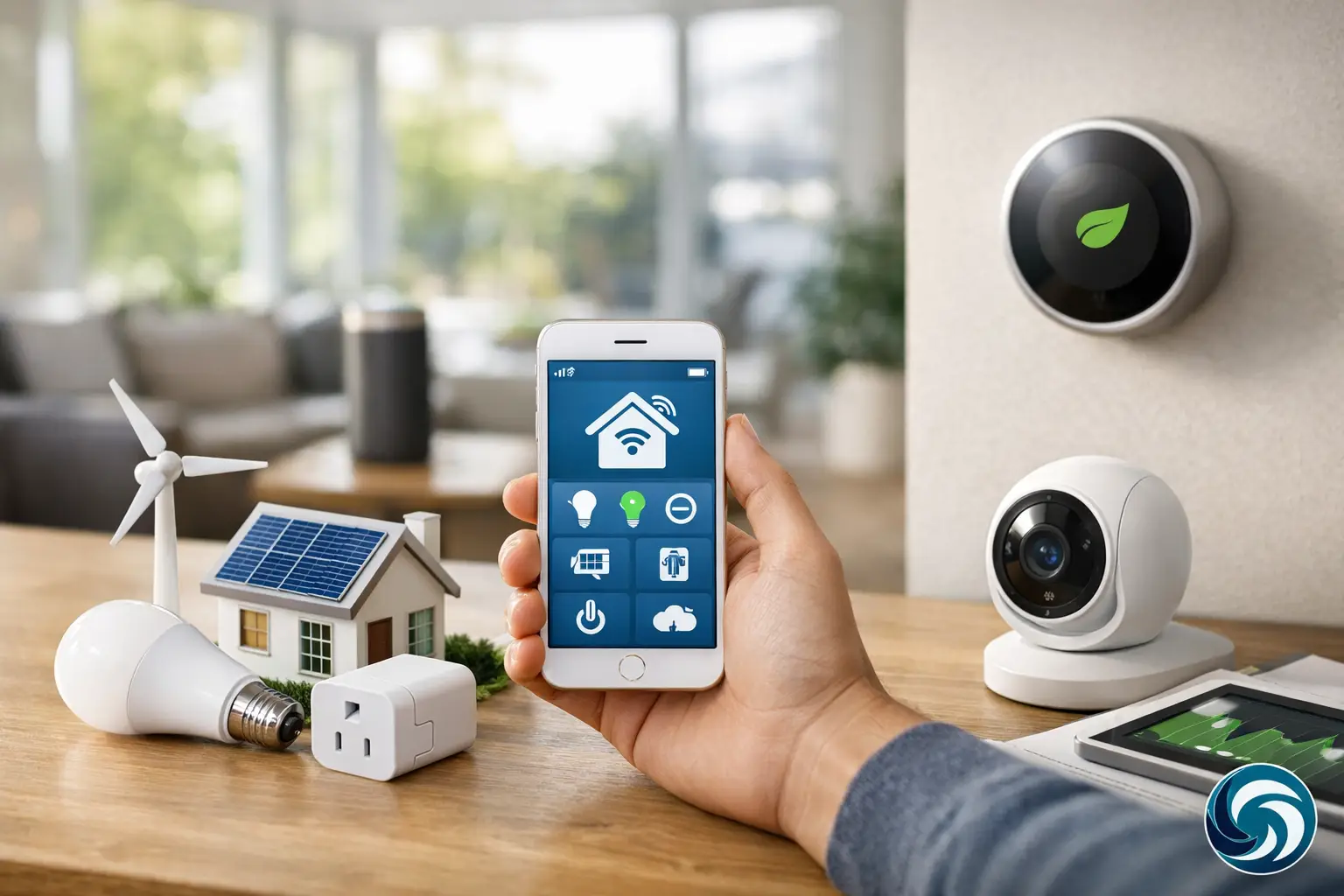
If your utility bills keep climbing but your home still feels too warm in one room and too dark in another, the problem is not always insulation or old equipment. Often, it is control. The best energy efficient smart home upgrades reduce waste by helping your home respond better to how you actually live, not how the house was wired decades ago.
That shift matters because energy savings are rarely about a single device. They come from better timing, better visibility, and better coordination between lighting, climate, shading, and occupancy. When those systems work together quietly in the background, you get a home that feels more comfortable while using less energy.
Why energy efficient smart home upgrades work
A lot of homeowners start with one smart thermostat or a few app-controlled bulbs. That can help, but isolated devices only go so far. Real efficiency improves when the home stops running the same way all day, whether anyone is there or not.
Smart technology helps close that gap. It can lower heating or cooling when the house is empty, raise shades to use daylight instead of electric lights, and turn off rooms that are no longer in use. The result is less wasted energy and fewer small adjustments you have to make yourself.
There is also a comfort benefit that gets overlooked. A home that manages light and temperature more precisely tends to feel better throughout the day. That means efficiency is not just about spending less. It is also about reducing hot spots, glare, overlit spaces, and equipment running longer than necessary.
Start with the upgrades that affect daily energy use
Some smart upgrades make a visible difference right away, while others do more behind the scenes. The best place to start is with the systems you use every day and the areas where waste is most likely.
Smart thermostats and climate control
Heating and cooling usually account for the largest share of household energy use. A smart thermostat can improve that picture by adjusting setpoints automatically based on schedule, occupancy, and time of day. If you leave for work and forget to turn the temperature down, the system can handle it for you.
That said, thermostat performance depends on the house and the equipment. In homes with uneven airflow, aging HVAC systems, or additions that never heat and cool properly, a thermostat alone may not solve the problem. Zoning, sensor placement, and professional setup matter. The goal is not just automation. It is accurate control that reflects how each space is actually used.
For larger homes or households with changing routines, climate automation can be especially valuable. Bedrooms can stay comfortable at night without conditioning the whole house the same way all day. That kind of targeted control is where savings and comfort tend to meet.
Smart lighting control
Lighting is an easy place to waste energy without noticing it. Lights stay on in empty rooms, exterior fixtures run longer than needed, and brightness levels are often higher than necessary. Smart lighting control solves that by making lighting more responsive and less dependent on memory.
Schedules, occupancy settings, dimming, and scene-based control all help reduce unnecessary usage. In practical terms, that might mean hallway lights turning off automatically, kitchen lights dimming in the evening, or exterior lighting following a set routine that changes with the season.
The biggest advantage is consistency. Once lighting behaves the right way by default, it no longer requires daily attention. You get lower consumption without turning energy savings into one more task.
Motorized window treatments
Window treatments are often discussed as a luxury feature, but they can have a real energy impact. During summer, automated shades can reduce solar heat gain before a room overheats. In winter, they can be timed to allow in sunlight during the day and close at night to support insulation and privacy.
This is one of the clearest examples of smart technology improving comfort and efficiency at the same time. Rooms with large windows often look great but feel harder to manage. Motorized shades help balance that, especially in spaces with direct afternoon sun, tall windows, or hard-to-reach coverings that rarely get adjusted manually.
The savings vary depending on window exposure and home design, so this is not a one-size-fits-all upgrade. But in the right spaces, it can take pressure off the HVAC system and make those rooms more usable throughout the day.
The systems behind smarter energy use
Not every upgrade is something you see. Some of the most effective improvements come from strengthening the infrastructure that allows your smart devices to work reliably and respond on time.
Reliable Wi-Fi and network design
A smart home cannot be energy efficient if key devices are constantly dropping offline, lagging, or working inconsistently. Thermostats, shades, sensors, cameras, and lighting controls all depend on a stable network. When that foundation is weak, automation becomes unpredictable, and homeowners often stop using the features that save energy in the first place.
This is why Wi-Fi optimization is more than a convenience issue. In larger homes, renovated homes, or properties with dead zones, network design can directly affect system performance. A dependable connection helps ensure that schedules trigger correctly, remote access works when needed, and devices stay in sync.
In many retrofit projects, this is the step that makes everything else work better. It is not flashy, but it is often essential.
Smart plugs and load control
Some energy waste comes from smaller devices that stay powered all the time. Entertainment components, chargers, office equipment, and secondary appliances can all draw power even when they are not actively being used. Smart plugs and load control can help manage those standby loads.
This is usually not the biggest source of savings, but it can be worthwhile in home offices, media rooms, and guest spaces where electronics tend to stay on by habit. The key is choosing where it makes sense rather than trying to automate every outlet in the house.
Used well, smart plugs can support simple routines, such as shutting down selected devices overnight or when the house is vacant. Used poorly, they can become cluttered and annoying. Good design keeps the experience simple.
Choosing energy efficient smart home upgrades that fit your home
The right upgrade path depends on how your home is built and how you live in it. A new build gives you more flexibility to plan wiring, device locations, and integrated control from the start. A retrofit calls for a more selective approach, focusing first on the biggest pain points and the best return on effort.
For some households, that starts with lighting and climate control because the savings are easier to see. For others, it starts with shades in sun-heavy rooms or network improvements that make the rest of the system dependable. There is no single package that fits every property.
That is also why professional installation matters. Smart home products are easy to buy, but not always easy to make reliable. Devices from different brands may not communicate well, sensor placement can be off, and automation can become frustrating if it is not tailored to your routines. A clean, well-designed system should feel intuitive from day one and continue working without constant troubleshooting.
In Northeast Ohio, seasonal swings add another layer to the decision. Homes need to handle summer sun, winter cold, and the day-to-day changes in between. Smart climate control and automated shading can be especially useful in that kind of environment because they adapt more easily than fixed manual habits.
What to expect from the investment
Energy savings from smart upgrades are real, but they are not all equal. A thermostat that corrects daily heating and cooling waste may pay off faster than automating a low-use guest room. Motorized shades may deliver strong comfort gains in one area of the house and only modest savings in another. The best results usually come from combining a few well-chosen upgrades instead of chasing every available feature.
It also helps to think beyond the monthly bill. Better lighting control extends bulb life. Better shading can reduce UV exposure on furnishings. Better climate management can reduce unnecessary HVAC runtime. Those benefits may not show up as a single line item, but they still contribute to a more efficient home.
For homeowners who want technology that feels polished rather than pieced together, the real value is often in how everything works as one system. Tri-County Technology approaches these projects with that in mind, focusing on practical performance, clean installation, and control that fits naturally into everyday life.
If you are considering energy efficient smart home upgrades, start with the spaces that frustrate you most. The room that is always too hot, the lights that never get turned off, the shades you rarely adjust, or the network that makes every smart device feel less smart. Fix those first, and the path to a more efficient home becomes much clearer.

Comments are closed