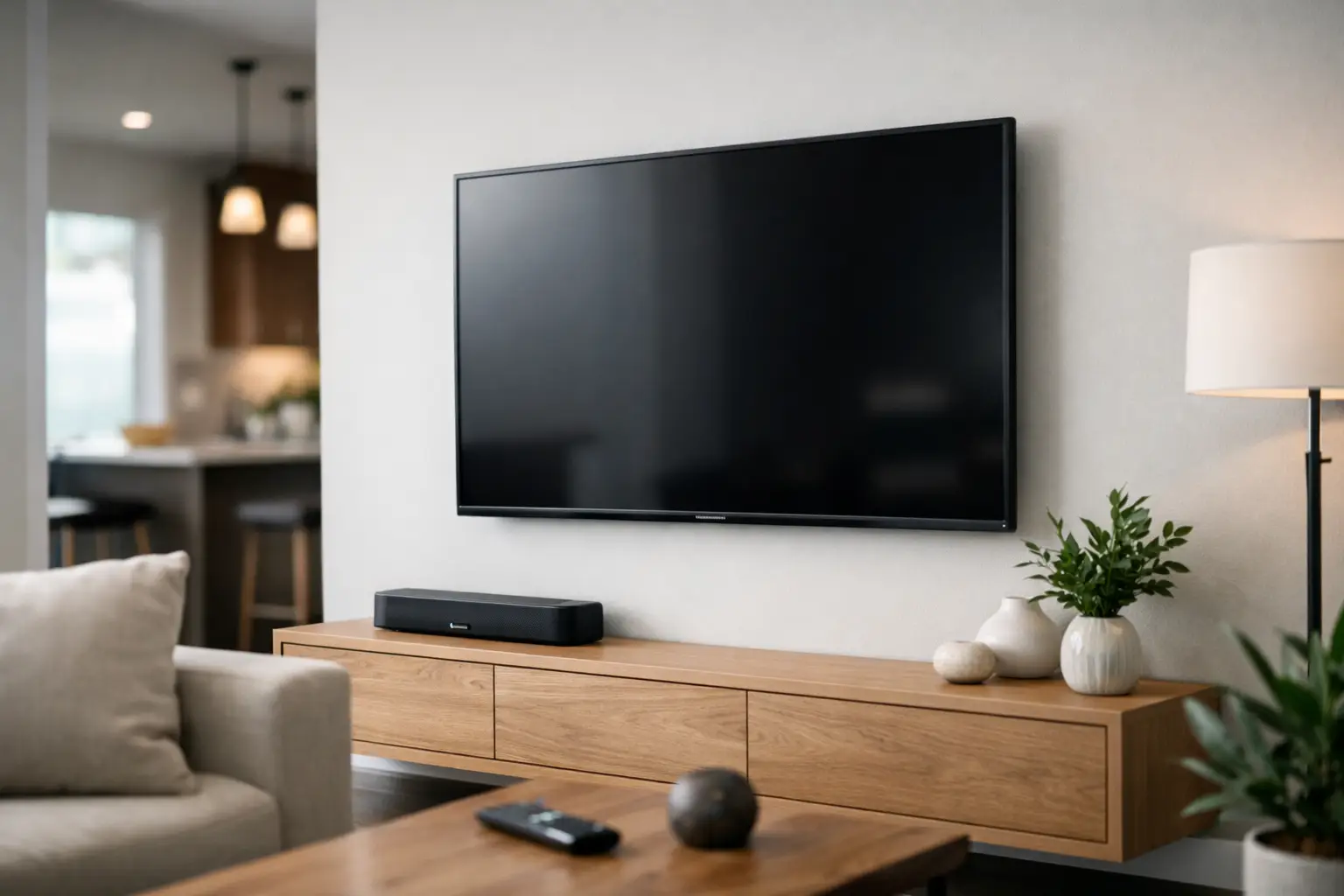
A wall-mounted TV can make a room feel instantly cleaner – until the first time you notice the power cord, HDMI cable, and dangling bundle running straight down the wall. That is why tv mounting with hidden wires matters so much. It is not just about appearance. It affects safety, viewing comfort, furniture layout, and whether the finished space feels intentional or unfinished.
For many homeowners, the goal is simple: mount the screen, hide the mess, and keep everything easy to use. The part that gets overlooked is that a clean result usually depends on what is behind the wall, where power is located, what devices need to connect, and whether the room is being updated now or built for the future.
Why tv mounting with hidden wires matters
A TV is often the visual center of a family room, bedroom, office, or media area. When the wires are visible, the eye goes straight to them. Even a premium display can look temporary when cords are exposed, especially in a carefully designed space.
Hidden wiring also makes the room easier to live with. There is less clutter around the console, fewer cords for children or pets to reach, and fewer compromises when placing furniture. In some rooms, it can even improve how your soundbar, streaming devices, or gaming systems are organized because the setup has to be planned instead of improvised.
There is also a practical side. A professionally planned installation can account for ventilation, signal reliability, outlet placement, and service access. That helps avoid the common problem where the TV looks clean on day one but becomes frustrating when you add a new device or need to troubleshoot a connection.
What hidden wire installation actually involves
When people picture tv mounting with hidden wires, they usually imagine all cables disappearing into the wall and reappearing exactly where they are needed. Sometimes that is exactly the solution. In other cases, the best approach depends on the wall type, the age of the home, and what equipment the TV needs to support.
If the TV is mounted over drywall with accessible stud bays, in-wall cable routing may be possible. This often includes a recessed box or media enclosure behind the TV, a power solution placed to code, and low-voltage pathways for HDMI, network, audio, or control cables.
If the wall is on an exterior surface, over a fireplace, backed by masonry, or finished in a way that limits access, the approach may need to change. A surface raceway painted to match the wall can still look clean. In some homes, it makes more sense to place source devices in a cabinet nearby and route only what is necessary. In others, adding a conduit for future cable upgrades is the smartest long-term move.
The right answer is usually not the one with the fewest visible parts. It is the one that looks finished, works reliably, and does not create problems later.
The biggest decisions happen before the mount goes on the wall
Mount height is one of the first things to get right. Many TVs are mounted too high because the installer is trying to clear furniture or mimic a showroom layout. In everyday use, that can lead to neck strain and a less comfortable viewing experience. The right height depends on seating position, screen size, room purpose, and whether the TV will be watched casually or for long periods.
Equipment location matters just as much. If you use only built-in streaming apps, the setup may be very simple. If you also have a cable box, Apple TV, Roku, gaming console, soundbar, or whole-home audio connection, the wiring plan becomes more involved. Hiding wires well means thinking through every current device and at least a couple of likely future changes.
The wall itself also needs attention. Standard drywall over wood framing is usually straightforward. Brick, stone, tile, steel framing, and fireplace surrounds require more planning and more care. A clean finish is possible in all of those cases, but the installation method changes.
Power and low-voltage lines are not the same thing
This is where many DIY projects go off course. Homeowners often assume that if a cable fits inside the wall, it can go inside the wall. That is not always true. Power needs to be handled correctly, and low-voltage cabling such as HDMI, Ethernet, and speaker wire follows its own installation standards.
Extension cords and standard power strips are not meant to be buried inside a wall. Running them that way may look tidy for the moment, but it can create safety and code issues. A proper installation uses the right in-wall power solution and keeps low-voltage pathways organized and protected.
This is also why planning matters more than patching. If you know where power, signal, and control cables need to go before the wall is closed up or the TV is mounted, the end result is cleaner and more dependable.
TV mounting with hidden wires in finished homes
Retrofitting an existing room is common, and it comes with trade-offs. The good news is that a finished home can still get an elegant result. The challenge is that walls may already contain insulation, fire blocking, masonry, or limited access points that affect cable routing.
In a finished living room, for example, the cleanest option may involve opening a small section of drywall, routing new cabling, installing recessed components, and then repairing and touching up the wall. In another room, a low-profile raceway may be the better choice because it avoids unnecessary wall work while still keeping the installation polished.
Neither option is automatically better. It depends on the room, budget, timeline, and how important a completely invisible path is to the homeowner. A professional installer should explain those trade-offs clearly instead of forcing every project into the same template.
New construction and renovation offer more flexibility
If the room is being built or remodeled, this is the best time to think beyond the TV itself. Prewiring for power, data, audio, and future upgrades can make the final installation cleaner and far easier to adapt later.
A well-planned setup may include a recessed outlet behind the display, dedicated pathways for HDMI and network cabling, blocking for secure mounting, and a central device location that keeps equipment out of sight. Even if the homeowner starts with a simple streaming setup, the room is ready for more without reopening walls later.
For builders and homeowners, this is where low-voltage planning has real value. It is easier to create a room that feels calm and finished when the infrastructure is considered early instead of added after the fact.
Common mistakes that make a TV install feel unfinished
The most common issue is treating the TV mount as the whole project. The mount is only one piece. If the viewing height is off, the outlet ends up visible, or the cables were not planned around the actual devices in use, the room still feels compromised.
Another mistake is leaving no room for service access. Hidden wires should not mean impossible access. Devices fail, streaming hardware changes, and cables sometimes need replacement. A clean installation should still allow practical access without dismantling the wall.
There is also a tendency to underestimate connectivity. A smart TV still benefits from stable networking, especially for streaming, whole-home integration, and software updates. In some homes, adding a wired network connection near the TV can improve reliability more than upgrading the TV itself.
When professional installation is worth it
If the wall is complex, the equipment list is growing, or the room is a focal point in the home, professional installation is usually the better investment. The value is not just that the TV ends up level. It is that the whole setup is designed to work together – mount, wiring, power, connected devices, audio, and daily usability.
A professional also helps avoid expensive rework. Mounting into the wrong surface, misplacing outlets, damaging finishes, or creating code issues can cost more to correct than doing it properly in the first place. For homes with custom finishes, fireplaces, or integrated entertainment systems, experience matters.
This is especially true when the TV is one part of a larger connected environment. In many Northeast Ohio homes, entertainment spaces also depend on strong Wi-Fi, distributed audio, lighting scenes, and device control that feels simple from the user side. Tri-County Technology approaches those spaces with the same goal homeowners want: technology that looks clean, works reliably, and stays easy to live with.
The best TV wall is the one you stop noticing after the first day. No cord clutter, no awkward screen height, no guessing which device controls what. Just a room that feels more finished, more comfortable, and easier to enjoy every time you turn it on.


Comments are closed