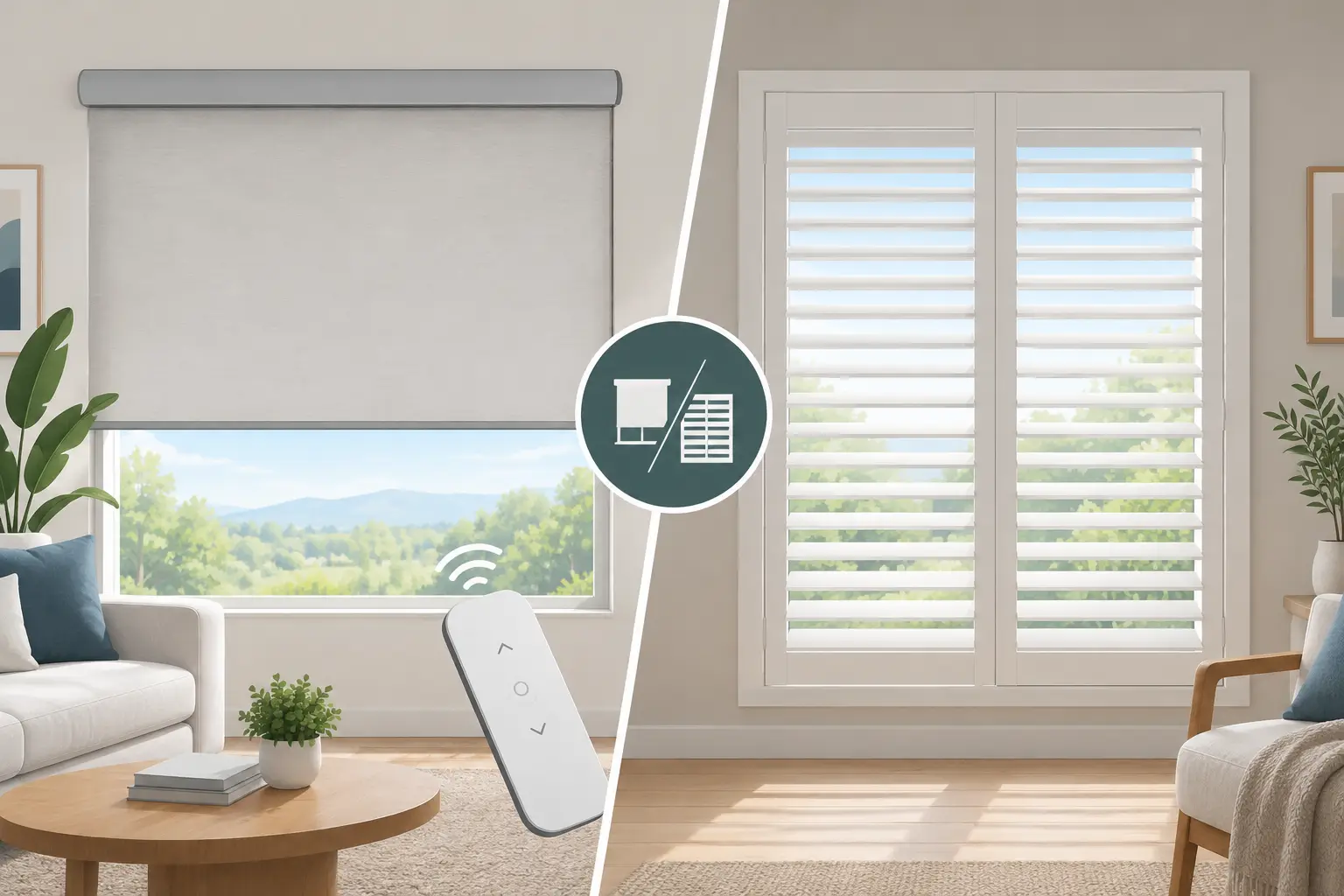
A west-facing living room can be bright and welcoming at 4 p.m., then uncomfortably warm and full of glare by dinner. The choice between motorized blinds vs shutters is not simply about how a window looks. It affects how easily a home manages sunlight, privacy, temperature, and the rhythms of everyday life.
Both options can be beautiful, durable additions to a custom home or renovation. The better fit depends on the room, the window shape, your preferred design style, and how much automated control you want. For many homeowners, the strongest solution is not one treatment throughout the entire house, but the right treatment in the right place.
Motorized Blinds vs Shutters: The Core Difference
Motorized blinds are fabric, woven, cellular, roller, Roman, or similar window coverings that raise, lower, and in some cases tilt using a quiet motor. They can be controlled by a wall keypad, handheld remote, app, voice command, or schedules that operate automatically at selected times.
Shutters are rigid, fitted window coverings with louvers that can be tilted to direct light and improve privacy. They are often made from wood, composite materials, or vinyl. Most residential shutters are operated by hand, though specialty motorized shutter systems are available for certain applications.
The practical distinction is simple. Motorized blinds give you more flexible automation and more fabric or shade options. Shutters create a permanent architectural look with precise louver control and a substantial, built-in feel.
Where Motorized Blinds Make the Most Sense
Motorized blinds are particularly well suited to large windows, hard-to-reach openings, and rooms where sunlight changes throughout the day. A bank of tall great-room windows may look dramatic, but manually adjusting several shades each morning and afternoon quickly becomes a chore. Automation makes that routine effortless.
Everyday light management
With programmed schedules, shades can lower during the strongest afternoon sun and rise again as daylight softens. This helps reduce glare on televisions and computer screens while preserving the natural light that makes a room feel open. In bedrooms, blackout-capable shades can support a darker sleeping environment. In kitchens and family rooms, light-filtering fabrics soften harsh sun without making the space feel closed off.
Motorized blinds are also a strong choice when privacy changes by the hour. A shade can lower in the evening with one command, then lift in the morning without requiring anyone to walk from window to window.
Better integration with a connected home
This is where motorized blinds stand apart. They can work as part of a broader home system, responding to schedules, scenes, and simple controls that your household will actually use. A “goodnight” setting might lower bedroom shades, while a “movie” setting can reduce glare in the media room.
The goal is not to add another app to manage. Done well, automated window treatments become a quiet background convenience. They operate when needed and stay out of the way when they are not.
A broader range of visual options
Blinds and shades offer considerable flexibility in color, texture, opacity, and mounting style. Roller shades can disappear into a recessed pocket for a clean modern appearance. Woven shades introduce warmth and texture. Cellular shades can help improve insulation, while Roman shades bring a more tailored, traditional look.
That range matters in homes where each room has a distinct purpose. A homeowner may prefer solar shades in a sunroom, blackout roller shades in bedrooms, and soft fabric Roman shades in a formal dining area, all coordinated within the same overall design.
Where Shutters Have an Advantage
Shutters are an excellent fit when the architectural finish is as important as light control. Their framed construction becomes part of the window itself, adding definition from both inside and outside the home.
A permanent, finished appearance
Unlike a shade that rolls up or stacks at the top of a window, shutters remain visible all the time. That is often their appeal. They offer clean lines, visual weight, and a custom-built character that works especially well in traditional, transitional, coastal, and farmhouse-inspired interiors.
They can also suit bathrooms, laundry rooms, and kitchens where durable, easy-to-clean surfaces are a priority. Composite shutters are commonly chosen for areas with humidity or frequent temperature changes.
Fine control of light and privacy
Tilted louvers allow daylight to enter while limiting direct views into the room. This can be useful on street-facing windows or in closely spaced neighborhoods. You can angle the louvers upward to brighten a ceiling and preserve a sense of daylight, or close them more fully when privacy is the priority.
That said, shutters do not create the same blackout effect as a properly specified blackout shade. Small gaps around louvers and panels allow some light through. For bedrooms where darkness is essential, a layered approach may be more effective.
Long-term durability
Quality shutters are substantial and can hold up well over time. Their durability is a meaningful advantage for homeowners who prefer a fixed, architectural treatment rather than fabric that may eventually need replacement. They also tend to be simple to wipe down, which can be appealing in busy homes.
The trade-off is that shutters are a more permanent visual and financial commitment. They are custom fitted, and their look is not as easily changed when a room is redesigned years later.
Cost, Installation, and Maintenance Considerations
Both options are custom products, so price depends on window size, materials, fabric selection, motor type, control method, and installation conditions. In general, standard shutters and premium motorized shades can overlap in price, while large automated shade systems or specialty shutter materials can raise the investment significantly.
Motorized blinds typically require planning for power. Some systems use long-life rechargeable battery packs, which are useful in finished spaces where running wire is impractical. Hardwired shades are often preferred in new construction and major renovations because they eliminate regular charging and keep the installation visually clean.
Shutters do not usually need electrical planning, but installation still matters. Uneven windows, deep trim, obstructions, and out-of-square openings all affect fit and operation. Professional measurement is essential for either choice. A treatment that is beautifully selected but poorly fitted will never feel polished.
For maintenance, shutters generally need dusting and occasional wiping. Shades need gentle dusting or vacuuming with an upholstery attachment, depending on the fabric. Motorized shade systems also benefit from professional support if programming, charging, or integration needs change over time.
Choosing by Room Instead of Choosing One Winner
There is no universal winner in the motorized blinds vs shutters decision because different rooms ask for different things. A few practical patterns can make the choice easier.
In a great room with tall glass, motorized roller or solar shades often provide the cleanest answer. They manage glare and heat while keeping the view available when the shades are raised. For a primary bedroom, motorized blackout shades offer day-to-day convenience and better control over early morning light.
In a bathroom, kitchen, or street-facing office, shutters can provide durable privacy and a finished architectural detail. For a home office, light-filtering motorized shades may be more useful if screen glare changes throughout the workday. In a nursery or guest room, consider a combination: shutters for daytime louver control with a blackout shade behind them when more darkness is needed.
Large, unusually shaped, or high windows deserve special attention. These openings are often where automation brings the greatest practical benefit, because they are difficult or inconvenient to adjust manually. A professional design consultation can also identify where wiring should be placed before drywall, preventing visible power solutions later.
Let Daily Life Lead the Decision
Start with the moments that frustrate you now. Maybe it is afternoon glare on the TV, bedrooms that heat up in summer, windows that are too high to reach, or the repeated evening routine of closing every covering in the house. Those details point more clearly toward the right solution than a showroom sample alone.
For homeowners planning a new build or renovation in Northeast Ohio, coordinating window treatments early can protect the clean lines of the finished space and make future control simple. Tri-County Technology helps homeowners bring that planning together so the finished system feels natural from the first day.
The best window treatment is the one you barely have to think about: it softens the sun when needed, gives you privacy when you want it, and lets your home feel like your home at every hour.


No responses yet